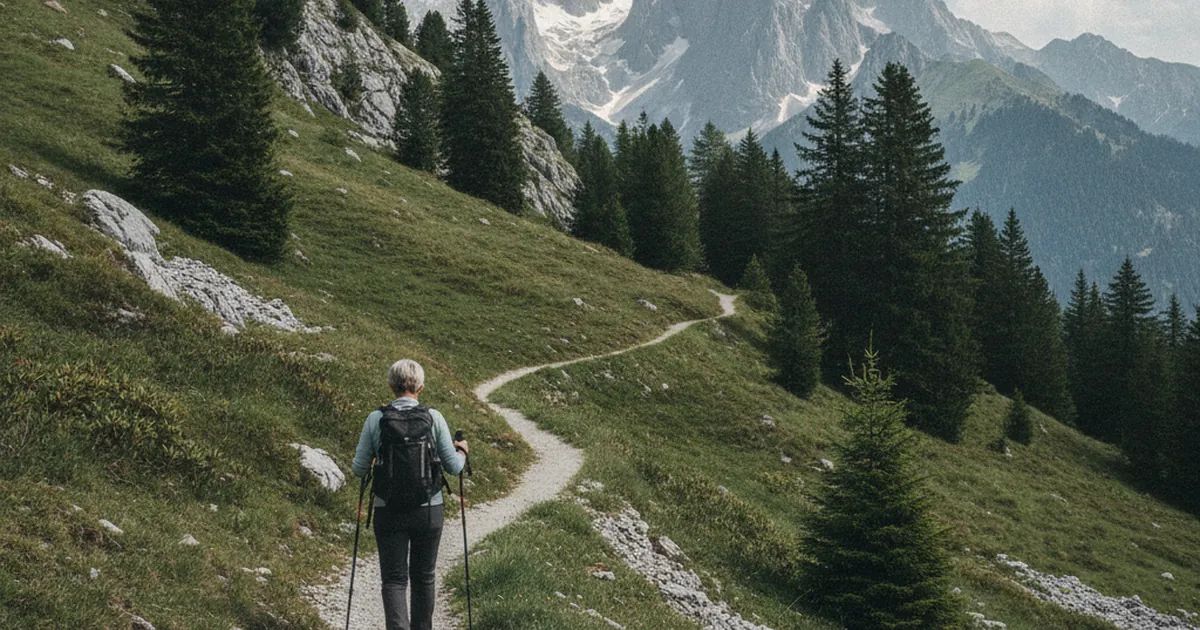
Walk any trail in the Alps and you will spot them: hikers gripping their poles halfway up the shaft, stuffing them under an arm for a photo, or waving them around without much intention. Trekking poles are one of the most effective pieces of kit you can carry in the mountains, as long as you know how to use them.
What poles actually change
On a flat forest path, poles do very little. But once the terrain climbs, turns rough, or a long descent stretches out below you, they start earning their place.
- On the ascent, good pole technique shifts load onto your arms and shoulders. Studies suggest a 20 to 30 percent reduction in leg effort over sustained climbs.
- On the descent, they absorb impact with each step, sparing your knees and ankles over the long run.
- On unstable ground (scree, roots, wet rock), they add two extra points of contact and reduce the risk of a sudden slip.
- On summer snowfields or slippery grass slopes, they keep you balanced without twisting an ankle.
If you hike regularly across Haute-Savoie on trails with several hundred metres of elevation gain, poles are worth every euro.
Adjustment: neither too short nor too long
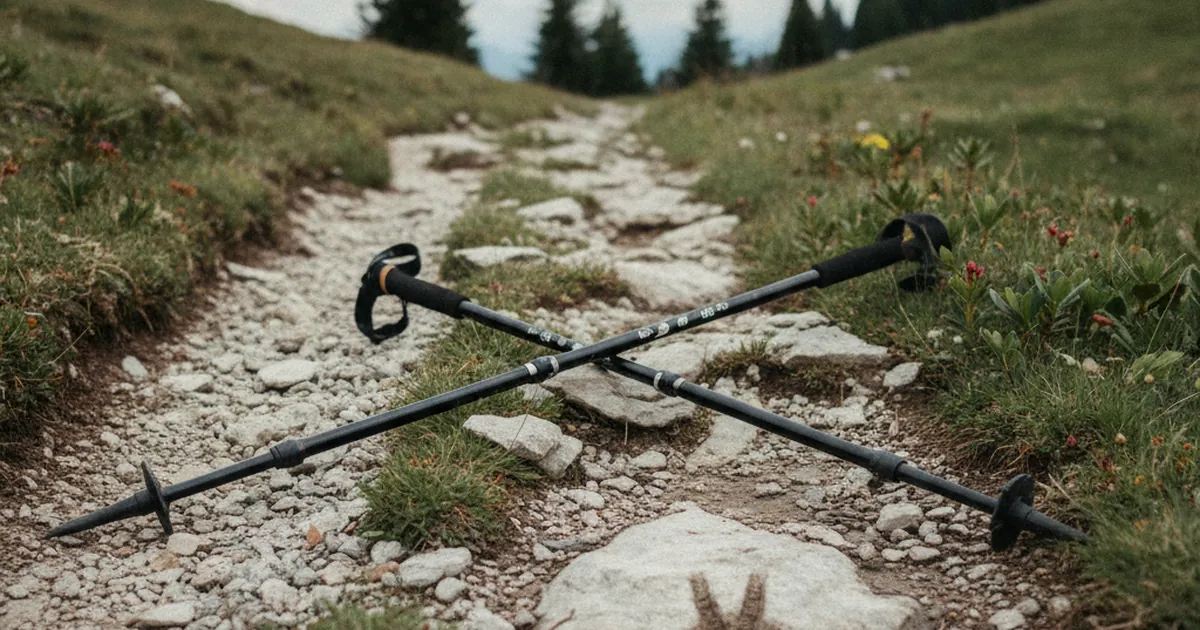
This is where most people go wrong. A badly adjusted pole is worse than no pole: it forces poor posture and tires the shoulder over time.
Basic setting for flat terrain or moderate ascent: elbow bent at 90 degrees when the pole tip touches the ground beside your foot, arm hanging naturally.
On steep climbs: shorten by 5 to 10 cm. The pole should reach forward so you can push without leaning your whole body into it.
On descents: lengthen by 5 to 10 cm. The pole planted ahead acts as a brake and stops you pitching forward on steeper ground.
On traverses across a slope: the downhill pole slightly longer than the uphill one. It feels odd at first, but it genuinely stabilises your stride on angled terrain.
On a standard telescopic pole, this adjustment takes five seconds. Get in the habit of dialling it in whenever the terrain changes, rather than keeping the same setting all day.
Wrist straps: using them correctly
The wrist strap is the loop around your wrist. Half the hikers you meet have it wrong, and lose half its benefit as a result.
Correct technique: push your hand up through the strap from below, then close your grip around the handle. The strap now rests across your palm near the thumb. When you plant the pole, you push into the strap rather than gripping hard. The result: less forearm fatigue and better transfer of force into each push.
One important exception: on exposed terrain or anywhere a fall is possible, slip your hands out of the straps. If you fall and a pole catches, the strap can wrench your wrist or shoulder. Safety comes first.
Rhythm and timing: the detail nobody explains
A pole planted at the wrong moment does nothing useful and can even trip you. The rule is simple: right pole, left foot forward, and vice versa. It mirrors the natural arm swing of ordinary walking.
Uphill, plant the pole slightly ahead and actively push to drive yourself up. Do not just rest the tip passively on the ground.
Downhill, anticipate. The pole goes in before you take the step, not after. It absorbs the shock and slows you on steep sections.
On routes like the Reray loop with its rocky switchbacks, or on the waterlogged summer pastures of Les Esserts above Morillon, this timing reflex is the difference between a controlled descent and an unplanned slide.
When to deploy them, and when to fold them away
No need to unfold your poles at the trailhead if the first hour is flat forest track. On open, level ground they just get in the way.
Deploy them when:
- The climb totals more than 200 to 300 continuous metres of elevation gain.
- The ground is rocky, wet, or cut by erosion gullies.
- Any descent drops sharply, even on dry, firm soil.
- You are above 2,000 metres: the terrain is rarely regular and fatigue compounds quickly.
In the Giffre valley or across the Aravis and Bornes massif, most hikes involve 600 to 1,000 metres of ascent. Your poles belong out of the bag from the first climb.
Materials and upkeep
Three main types exist:
- Aluminium: solid, affordable, slightly heavier. Bends under stress rather than shattering, good for all-round use.
- Carbon: light and stiff, but brittle under lateral impact. Avoid if you regularly push through scree or dense scrub.
- Aluminium/carbon blend: a sensible compromise for varied mountain terrain.
For upkeep: rinse with fresh water after wet outings, check the locking mechanism before each trip, and replace rubber tip covers as soon as they wear through. Swap the large winter baskets for small summer ones at the start of each season: the big baskets wear down pointlessly on firm ground.
Trekking poles are not a fashion accessory. Used correctly, they extend your days in the mountains, protect your joints over time, and give you more confidence on technical terrain. If you hike regularly on the trails of Haute-Savoie, learn to use them properly. The difference shows on the very first long descent.