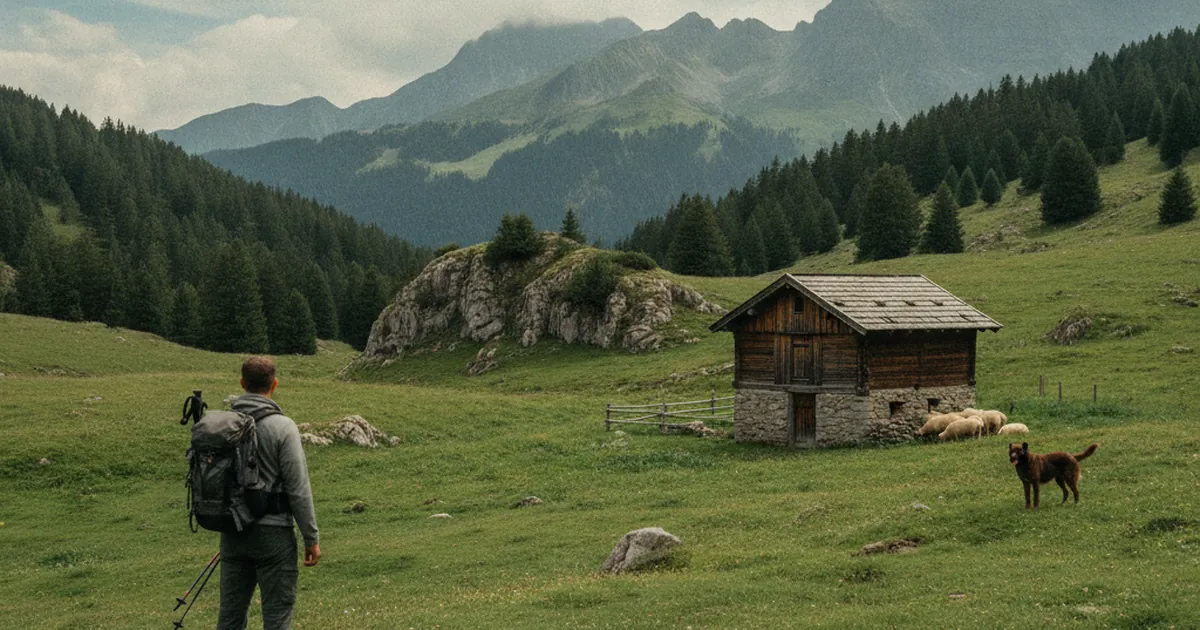
Every summer, as the snow retreats and the first herds begin climbing toward the high pastures, a scene thousands of years old replays itself across the Alps. Alpine shepherds take up residence in their mountain chalets, set up electric fences, and organize their days around the animals. But beneath this timeless image, the profession has changed profoundly. Those who watch over the flocks today face challenges their predecessors could never have imagined: the return of the wolf, increasingly dry summers, and ever-growing numbers of hikers. When hiking in Haute-Savoie, you will inevitably pass through alpine pastures. Understanding what actually goes on there changes the way you see the mountains.
An ancient profession under pressure
Mountain transhumance is an ancestral practice. For centuries, it structured the local economy: livestock spent the summer at altitude while fodder from the valley floors was stockpiled for winter. The shepherd was a central figure, often alone or with a small team, responsible for a flock that could exceed five hundred head.
Today, most high pastures are managed by pastoral groupings. The shepherd is a salaried employee on a seasonal contract of roughly five months. Pay has improved, and so has equipment: many chalets have been renovated, solar electricity is now common, and mobile communications allow regular contact with the valley below. None of that erases the fundamental hardship of the work: rising before dawn, constant herd monitoring, animal health management, fence and water-point upkeep. A shepherd alone with four hundred ewes in an isolated pasture in the Haut-Giffre does not work eight-hour days.
The wolf: a reality that cannot be ignored
The wolf returned to the French Alps in the 1990s, and its presence has gradually extended into Haute-Savoie. For livestock farmers and shepherds, this means a substantial additional workload.
Protective measures, partly covered by the state, include livestock guardian dogs (the patous), reinforced electric fencing, and the shepherd's nightly presence near the flock. These reduce attacks without eliminating them. When an attack occurs despite all precautions, it is both an economic loss and a psychological blow for someone who did everything right. Some pastures in the Chablais have implemented heightened monitoring protocols on high-risk nights. Shepherds coordinate with one another and share information on wolf movements.
Climate change disrupting the rhythms
Shepherds say it plainly: summers have changed. Heat waves last longer, storms hit harder, and vegetation struggles earlier in the season. Herds sometimes have to be brought back down sooner than in the past, because pastures are scorched or water sources run dry. Springs that once flowed throughout the summer now stop in August.
In areas like the high pastures around Sixt-Fer-à-Cheval or Samoëns, water management during dry spells has become a first-order concern. Some shepherds have rerouted their grazing circuits to find fresh grass at higher elevations or on shadier slopes.
Summer tourism: coexistence and friction
Herds and hikers now share the same spaces, and that coexistence is not always smooth. The common friction points are well known: unleashed dogs scattering the flock, hikers leaving gates open, waste left on the pasture. These are rarely acts of malice; they are usually born of ignorance.
From the shepherd's perspective, human presence can also work in their favor: more people on the trails means more eyes in case of trouble. Some shepherds welcome visitors, explain their work, and sell cheese directly from the chalet. Tourism becomes a complementary resource rather than a constraint. If you want to cross active alpine pastures, the Lac de Vallon route near Bellevaux passes through several summer grazing zones, and the Alpage des Rutines from Chantemerle tells you exactly what you will find right in its name.
Shepherds reinventing their trade
A new generation of shepherds is emerging. They often come from unexpected backgrounds: former office workers seeking a change, mountain agriculture enthusiasts, graduates of pastoral training programs. They arrive with solid technical knowledge and a strong environmental awareness. Some are experimenting with rotational grazing to protect vegetation, careful herd sizing to reduce pressure on fragile pastures, and drone surveillance for difficult terrain.
Networks are also forming. Shepherds exchange more than before, train each other, and share feedback on dealing with wolves or drought. A professional solidarity that is strengthening what was historically one of the loneliest jobs in the mountains.
How to behave when crossing an alpine pasture
- Always close gates and fences behind you.
- Keep your dog on a leash in any grazing area, even if it is well-trained.
- Do not approach the patous too closely: they are doing their job, so stay calm and give them space.
- Take all your waste with you, including organic scraps like fruit peel.
- If the shepherd is visible, a greeting and a few words are always welcome.
The work of alpine shepherds is one of the most concrete forces keeping these open landscapes alive for you to walk through. Without them, the pastures close in, the forest reclaims the land, and the panoramas disappear. The next time you see a herd at altitude, you will know what it represents.