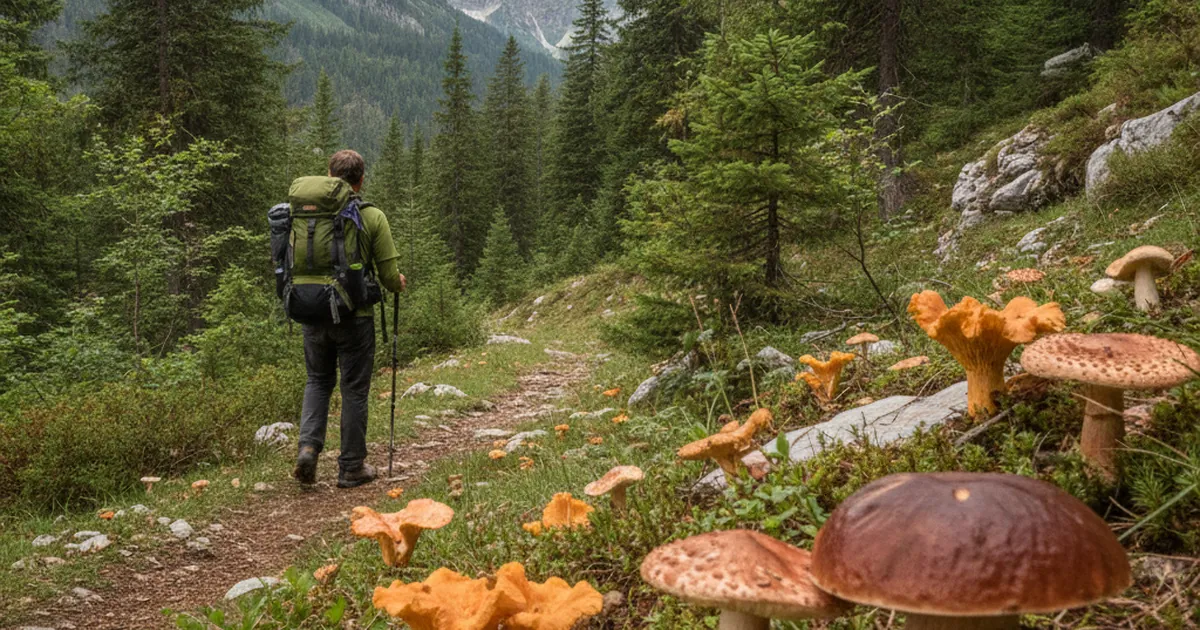
Late August marks the start of one of the most anticipated periods for curious hikers: mushroom season. In the mountains, the first rains of late summer, combined with cooler nights, create ideal conditions for mushrooms to emerge under spruces and in beech forests. But before you grab the wicker basket, a few guidelines are worth knowing for anyone heading out to explore the trails of Haute-Savoie.
The right picking window
Peak season in Haute-Savoie typically runs from late August to mid-October, with variation depending on altitude and rainfall. Below 1,000 m, mushrooms appear as early as late August. Between 1,000 and 1,500 m, the season stretches into October. Higher up, the first frosts cut it short.
The trigger to watch for: 20 to 30 mm of rain followed by mild temperatures around 12 to 18°C. These conditions transform the undergrowth within a few days. Hikers who know the Savoyard massifs well read weather forecasts with this specific angle in mind from the second half of August onward.
Species you might encounter
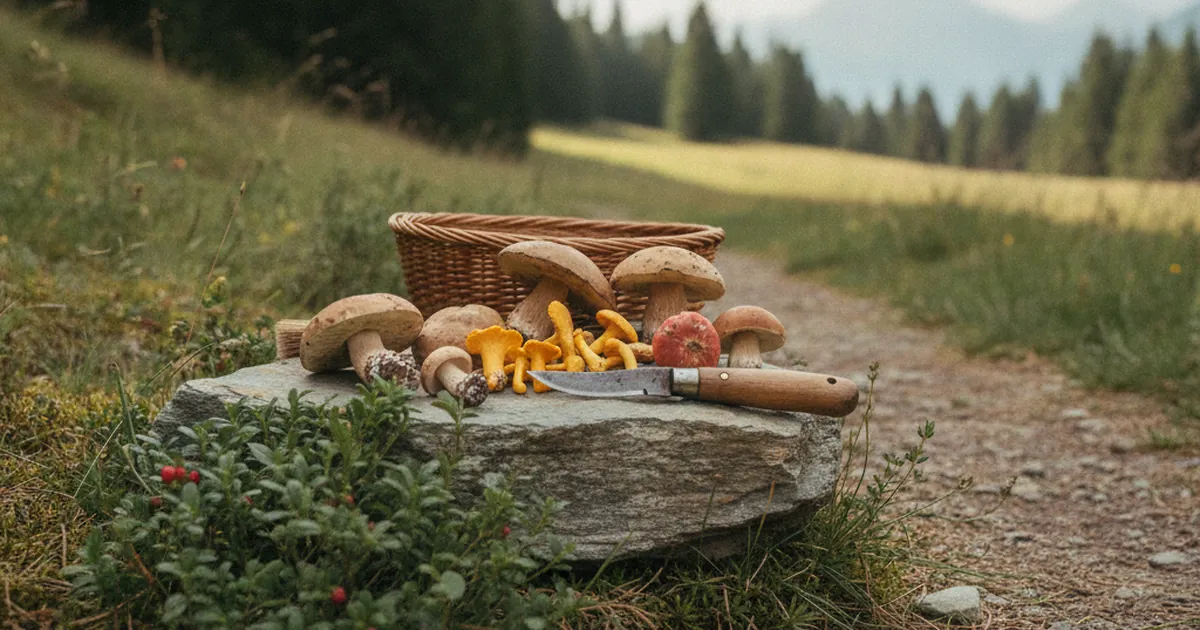
Four species are the classic targets for amateur pickers in the mountains:
- Porcini (Boletus edulis), under spruces and beeches, recognisable by its brown cap and white flesh that does not turn blue when cut.
- Chanterelle (Cantharellus cibarius), golden yellow, with forked ridges rather than true gills under the cap, and a characteristic fruity smell.
- Saffron milk cap (Lactarius deliciosus), orange, exuding a saffron-orange milk when broken, mainly found under pines and spruces.
- Hedgehog mushroom (Hydnum repandum), cream to pale beige, with spines rather than gills under the cap, found in beech forests.
These four species reduce confusion risk when you know their precise characteristics well. But "relatively easy to identify" does not mean risk-free.
What not to pick
The basic rule: if you have any doubt at all, the mushroom stays in the ground. A mushroom that is not 100% identified does not get eaten, full stop.
Amanita species (death cap, destroying angel, spring amanita) cause nearly all fatal mushroom poisonings in France. They can resemble young porcini or button mushrooms at early stages. Satan's bolete and bitter bolete are dangerous porcini lookalikes. The false chanterelle and jack-o-lantern mushroom resemble chanterelles but have true gills, a key distinguishing feature.
Good spots: mixed forests and woodland edges
Spruce and fir forests are prime territory for porcini and milk caps. Beech forests tend to host hedgehog mushrooms and chanterelles. Woodland edges, where the forest opens onto a clearing or an alpage, are often highly productive.
In the Massif des Bauges, around Gruffy and Leschaux, the forests of Annecy-Bauges offer a very different feel from the high-altitude corridors of the Chablais or Faucigny. These are quieter spots, with dense, damp undergrowth that stays productive into October. The La grotte des Maquis depuis Gruffy trail passes through wooded sections worth a close look in September. In the Ramaz sector, the Forêt de Pététoz via la Ramaz route crosses typical montane forest zones at an altitude where the mushroom season lasts.
Regulations: what you are allowed to do
In Haute-Savoie, mushroom picking for personal consumption is generally permitted up to a limit of 5 litres per person per day. This varies by commune and forest ownership. Some state forests post specific rules at the entrance. The Parc Naturel Régional du Massif des Bauges has its own guidelines, sometimes more restrictive.
Always prohibited: picking for sale without a permit, using rakes or tools that damage the mycelium layer in the soil. Leave mushrooms that are too small, damaged, or that you cannot identify: they continue to sporulate and enrich the environment for future years.
What to bring
- A wicker basket, not a plastic bag (heat and lack of airflow speed up decomposition and can promote toxin buildup in the hours after picking).
- A clean knife to cut cleanly at the base of the stem, without pulling up the whole mycelium.
- A reliable identification guide with good photographs, ideally one specialised in European mountain fungi.
- Your phone with the Poison Control Centre number saved (in France: dial 15 for emergencies, or 01 40 05 48 48 for the Paris centre).
If you suspect accidental ingestion of a toxic species, do not wait for symptoms. Some toxins, notably the amatoxins in the death cap, cause no visible signs for 6 to 24 hours after ingestion, by which time serious damage has already begun. Contact emergency services immediately and keep a sample or a photo of the mushroom consumed.
A final thought
Late summer in the mountains offers this double reward: landscapes starting to turn colour and forests coming alive underfoot. Mushroom picking, practised methodically and cautiously, becomes one more excellent reason to lace up your boots and head out. But the golden rule holds in every season: if you are not completely certain, you do not eat it.