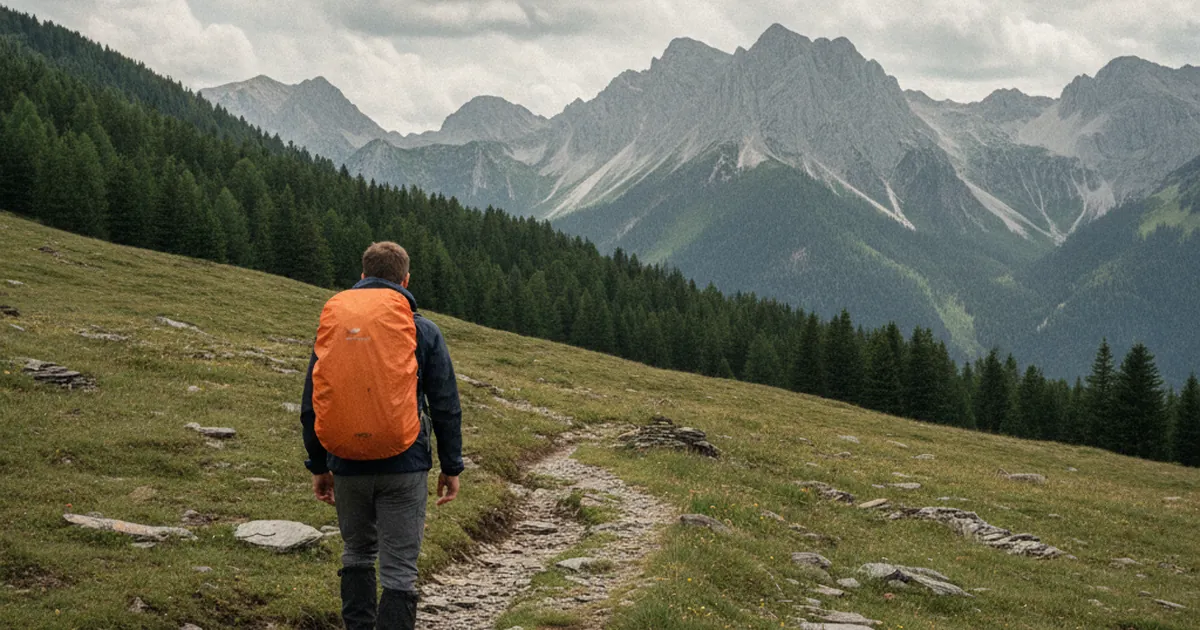
In Haute-Savoie, the surprise shower is part of the landscape. You set off in bright morning sunshine and by early afternoon a storm is building above the ridgelines. This is not the exception: it is how mountain weather works. The good news is that with the right gear, rain does not ruin the day, it becomes just another variable you can handle. The classic mistake is thinking only about the jacket. Effective rain protection is a system of several pieces covering your body, your pack and your feet.
The rain jacket: picking the right one makes all the difference
The light wind-shell with a water-repellent coating sitting at the bottom of your wardrobe handles a few drops and then surrenders after ten minutes of real rain. In the mountains, what you need is a waterproof and breathable membrane. Gore-Tex, eVent, Dermizax and their equivalents block water while letting body vapour escape, preventing the overheating that turns a jacket into a sauna from the inside. For solid mountain performance, aim for a waterproof rating of at least 15,000mm, ideally 20,000mm for serious outings.
Details that matter: fully taped seams (not just at the shoulders), an adjustable hood with a stiff peak, and waterproof zip closures across the chest. A longer cut at the back keeps your lower back dry when you are leaning into the climb. Breathability (measured in grams per square metre per 24 hours) is just as important: a poorly breathable jacket soaks you from the inside through condensation, which cancels out the waterproofing altogether.
The bottom half: overtrousers and gaiters
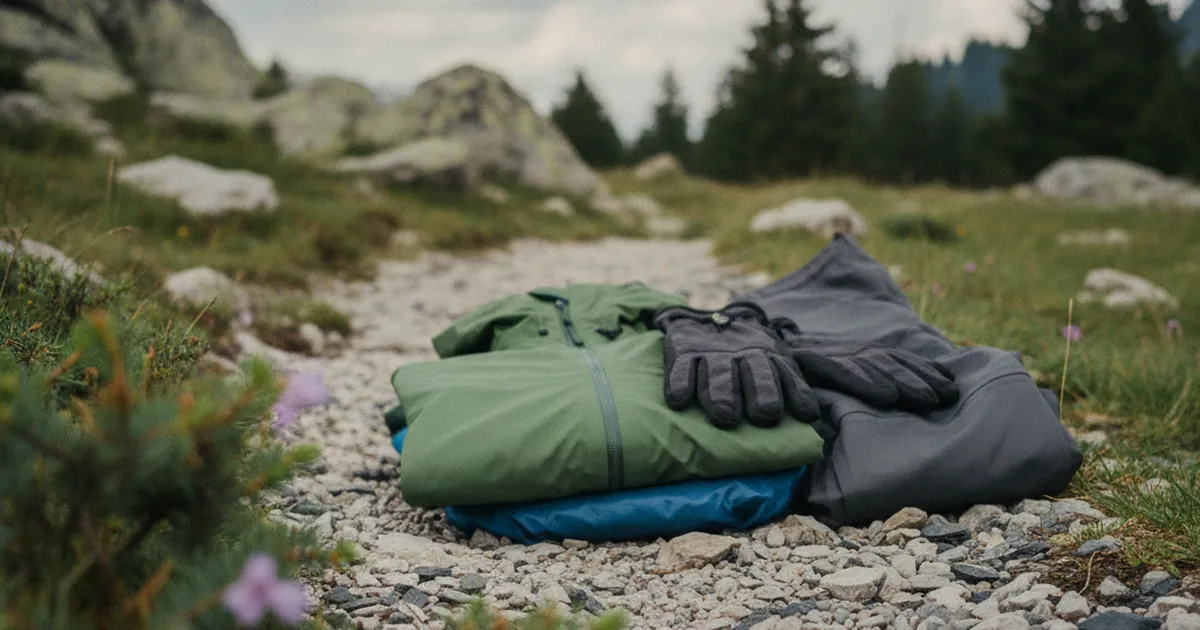
Your legs get wet too, faster than you would expect. Waterproof overtrousers pack down to the size of a fist in your rucksack. Slip them over your hiking trousers in seconds when the shower hits. Models with side zip openings let you put them on without removing your boots, a genuine advantage when rain arrives quickly.
Gaiters complete the protection for the lower half. They seal the gap between your boot and ankle, stopping water from running down your leg into your sock. In woodland, long grass or a muddy trail after an earlier downpour, gaiters are the difference between dry feet at the end of the day and wet socks after the first hour. Not a luxury: a practical purchase costing 25 to 40 euros that pays for itself on the very first wet outing.
Pack cover: the one everyone forgets
Most hiking rucksacks are treated with a water-repellent coating, but they are not waterproof. Sustained rain gets through the fabric and the seams. A pack cover stows in a small pocket at the base of the pack and wraps the whole thing in a few seconds. Make sure it matches your pack's capacity: a 30-litre cover will not stretch over a 45-litre pack.
For the really sensitive items (phone, documents, external battery), a waterproof zip bag inside the pack alongside the cover is a good habit. A water-resistant smartphone is not designed for 45 minutes in an outer pocket in driving rain. A few-euro waterproof pouch avoids a lot of unpleasant surprises.
The extras that change everything
- Light waterproof gloves: cold wet wind chills your hands fast. Numb fingers make map reading, pole handling and zip pulls hard to manage. A thin, water-repellent glove that stuffs into a pocket costs little and earns its place often.
- Cap or brim hat: your hood stops rain coming from above, but not the drops that hit you from the side or head-on in a gusty shower. A stiff brim keeps your eyes dry and your visibility clear.
- Waterproof boots: a membrane in the boot (Gore-Tex or equivalent) keeps moisture out in normal conditions. Paired with gaiters, the combination holds up well. Without gaiters, even the best membrane gets bypassed by water trickling down the ankle into the boot.
On a demanding outing like the Dent de Verreu via Vallon, where exposed ridges leave no room for improvisation in a summer storm, the full system is not optional. On a gentler, more sheltered path like the refuge trail at Saint-Jorioz, mostly forested and close to the lake, a jacket alone is often enough and the rest adjusts to the day's conditions.
Organising your pack before you go
Rain gear only works if you can reach it without unpacking everything. Jacket and pack cover go at the top or in an accessible side pocket. Overtrousers and gaiters in the same place or in a mesh outer pocket. The goal: 30 seconds from clear sky to fully geared up. Showers build faster than you would think, especially in the Giffre valley where summer storms roll in from the west with little warning, or in the Aravis-Bornes where damp fronts pushing up from Lake Annecy can reach the limestone ridges in minutes.
Getting into the habit of packing the evening before means nothing gets left behind. You check the forecast, adjust your layers, put the rain gear at the top. Simple, effective, and it genuinely changes how much you enjoy the outing.
Wrapping up
Mountain rain does not deserve to be feared. With a membrane jacket, overtrousers, gaiters, a pack cover and a few well-placed extras, it becomes just another condition to manage. You keep walking, the landscape is often stunning in the rain, and you come back dry. To plan your next outings on the trails of Haute-Savoie and find routes that suit whatever the weather brings, Le Yaute Mag offers detailed trail guides with all the practical information you need to stay prepared.