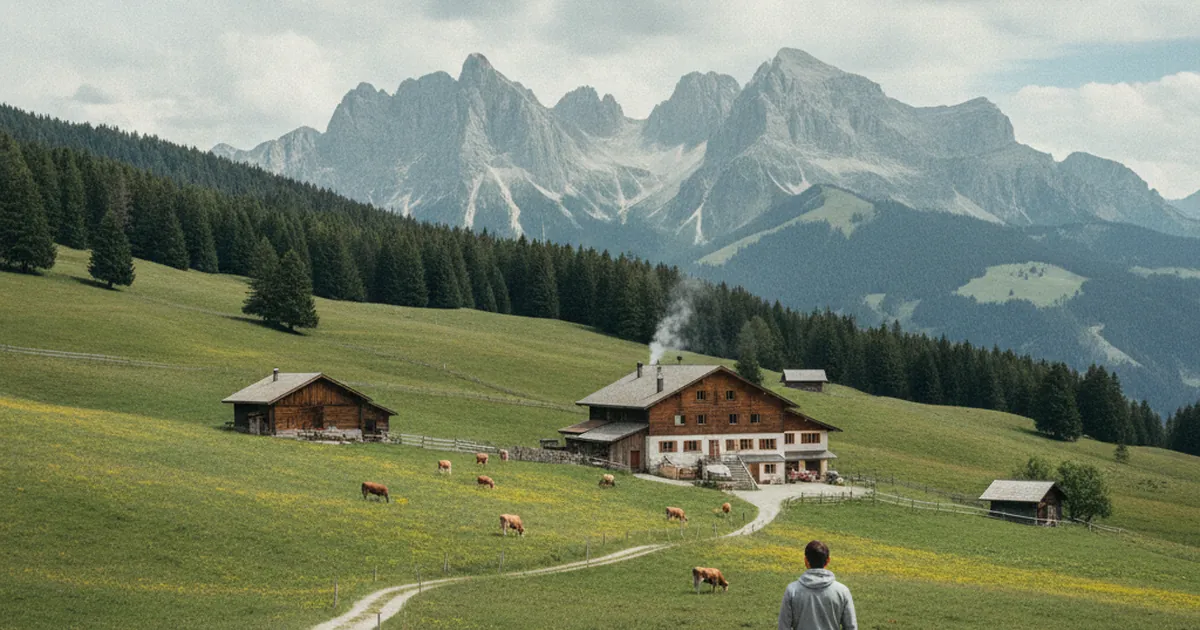
In Haute-Savoie, a fruitière is far more than a cheese workshop. It is the beating heart of the high-altitude pastures, the outcome of a centuries-old collective organisation, and the direct link between mountain landscape and what ends up on your plate. If you have been hiking Haute-Savoie's trails for a few years, you have almost certainly walked past one of these thick-walled buildings, often marked by a simple "farm shop" sign, without quite knowing what goes on inside. Here is what goes on.
A name that explains everything
The word fruitière does not come from "fruit" in the culinary sense. It derives from the Latin fructus, meaning profit or yield. To "fructify" the milk meant turning a perishable product into something durable and valuable. Fresh milk sours within hours in warm weather. Transformed into cheese, it becomes transportable, tradeable, and it actually improves with time. For farming families living at altitude, this was a practical and economic revolution in one.
The cooperative logic followed naturally. A single herd does not produce enough milk each day to justify running a cheese-making operation on its own. By pooling their resources, several families could reach the necessary threshold. Each brought their milk, carefully weighed, and left at the end of the season with their share of cheese or its cash equivalent.
Centuries of peasant solidarity
The earliest records of alpine dairy cooperatives date back to the thirteenth century in the Jura and the Pre-Alps. In Haute-Savoie, they developed most intensively between the seventeenth and nineteenth centuries, driven by herd growth and the opening of regional markets. Every alp, sometimes every cluster of chalets, had its own fruitière.
Some have survived unchanged across the centuries. Others merged, modernised their equipment, or joined collective branding schemes under AOP (protected designation of origin) rules. But the core logic has stayed the same: local producers pooling their milk to create something no single one of them could make alone. The cooperative model holds up well against industrial dairy pressure, because it rests on a territorial bond that large-scale operations cannot replicate.
The cheeses tied to Haute-Savoie fruitières
Each geographical area of Haute-Savoie developed its own cheeses in direct connection with its fruitières.
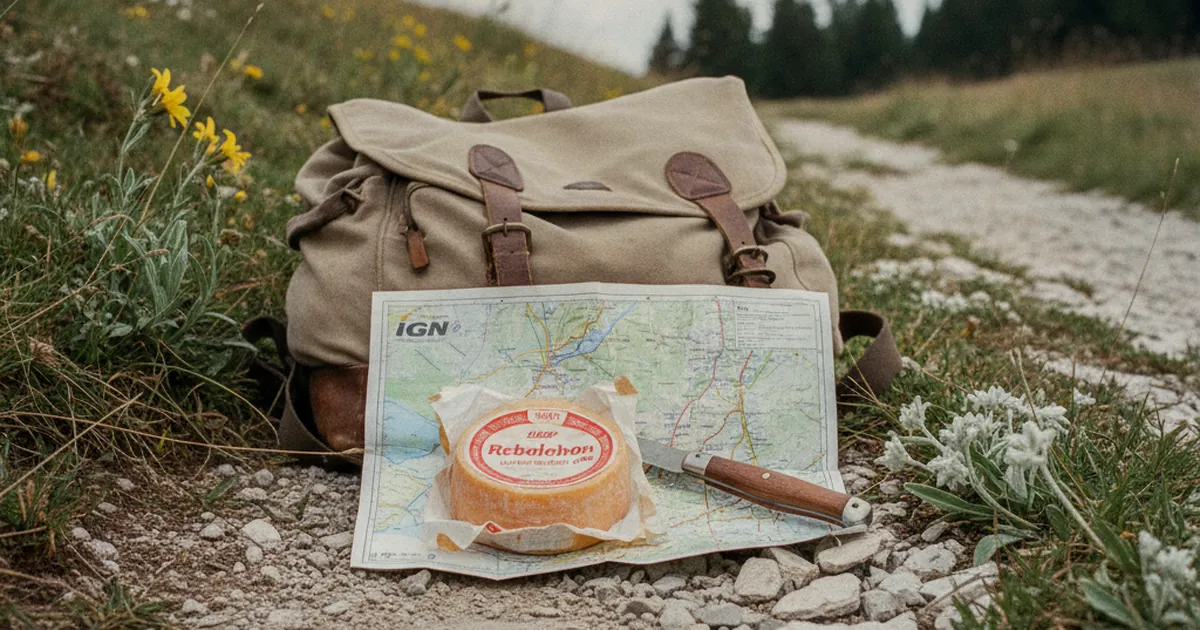
Reblochon is the most iconic. Its name comes from "reblochage," an old practice of incomplete milking. Farmers would declare a reduced milk volume to the lord or alp owner, who calculated the tax on that basis. Once the inspector had left, they would reblocher their cows to collect the remaining milk, which was richer in fat. This second-milking milk produced a particularly creamy cheese. Today Reblochon remains associated with the Aravis massif and the Thônes valley, the unofficial capital of this cheese.
Abondance takes its name from the valley that gave birth to it in the Chablais. A pressed, semi-cooked cheese, it is recognisable by its distinctive quarter-circle rind trimming along the heel. Its production zone spreads across several communes in the Chablais, with active fruitières still operating in mountain villages throughout the area.
Tome des Bauges, produced in the Bauges massif straddling the border between Haute-Savoie and Savoie, rounds out the picture. Rougher, firmer, it appears on local market stalls and mountain restaurant boards without drawing the same spotlight as its AOP-certified neighbours.
Visiting a fruitière
Many fruitières open to visitors in season, generally from June to September when dairy activity is at its peak. A visit lets you see the production vats, the ageing cellars, and watch the cheesemaker who, every morning, turns hundreds of litres of milk into freshly-born wheels. Tasting and direct sales are almost always on offer.
If you are planning a stay in the Arve valley or the wider pre-alpine massifs, check with local tourist offices: they keep updated lists of accessible fruitières and their opening hours. The welcome is unpretentious. The cheese is invariably better than anything from a supermarket shelf.
Fruitières and hiking trails
On many Haute-Savoie trails, the alpine chalets you pass in summer are directly connected to the valley fruitières below. In the high mountains, some producers still transform their milk on the spot, in working mountain dairies that operate throughout the grazing season. This is not staged heritage tourism: it is the continuity of a practice that shaped this landscape over centuries.
A walk up to the Rutines alp from Chantemerle takes you through active grazing pastures. The herds browsing at these altitudes produce the milk that will be collected, by the next morning, and taken down to the valley fruitière. It is a short supply chain in every sense: a few kilometres on foot, a few days of production, and a cheese that was born from the same landscape you have just crossed.
If you pass a shepherd or a cheesemaker on the trail, a simple greeting is all that is needed. They are not there to animate a tourist attraction. They are working. And that work is what gives this territory its flavour.
A fruitière is not a heritage exhibit. It is a living, daily link between alp grass, morning milk, and the cheese you will find on a market stall on Saturday. In Haute-Savoie, that chain has not been broken. You can still follow it, from cow to rind, and understand why this territory tastes the way it does.