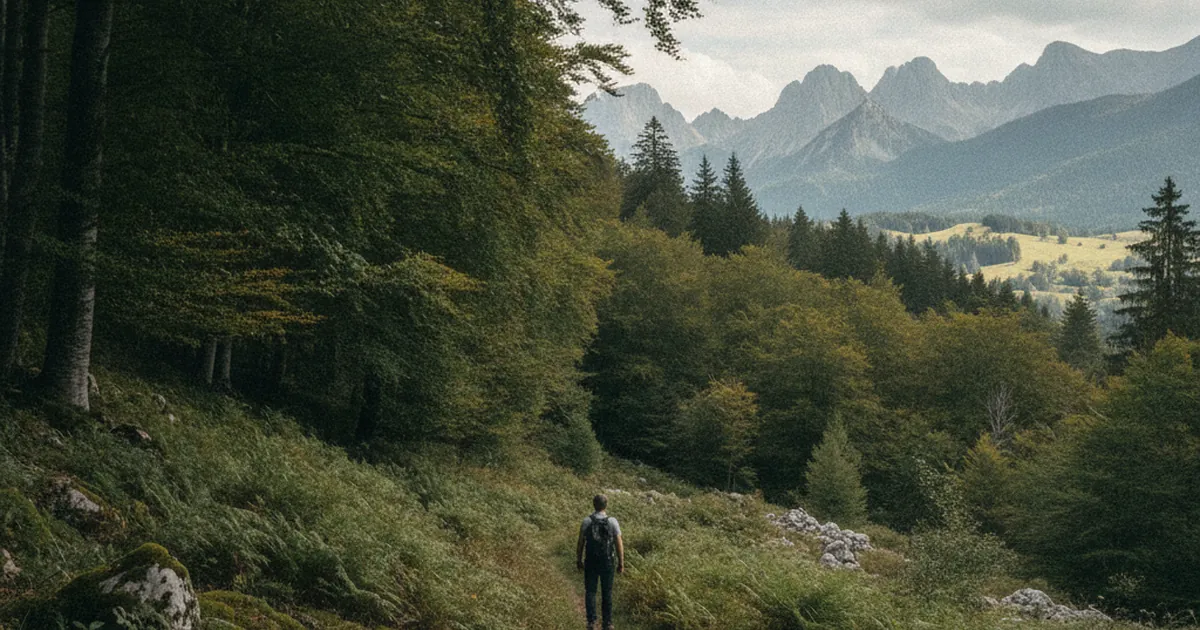
Step into a beech forest in the Faucigny and you step into a different world. The light drops, the temperature falls two or three degrees, and the sounds of the valley disappear. The common beech (Fagus sylvatica) rules the mid-altitude slopes of the Faucigny, at roughly 700 to 1,400 metres, and it builds around itself an ecosystem whose richness most hikers walk straight through without pausing to notice. Here is what is really happening under those arching canopies.
Beech: the king of the montane slopes
Beech is not an opportunist. It occupies a precise niche: cool slopes with reliable snow cover, sheltered from temperature extremes, with deep soil and consistent moisture. In the Faucigny, it colonises north- and east-facing hillsides around the Giffre valley and the surrounding massifs. Below, oak woodland takes over. Above, at around 1,400 to 1,500 metres depending on the aspect, silver fir (Abies alba) joins it to form the beech-fir forest, a mixed woodland notable for its impressive density and architecture.
Beech is unmistakable: smooth, grey bark that stays that way for the entire life of the tree, even on hundred-year-old specimens. Its leaves shift from pale green in spring to deep green in summer and a blazing copper in October. In winter, young beeches often hold onto their dried leaves well into the cold months, a trait called marcescence that makes them easy to spot on a midwinter walk.
A canopy that makes its own rules
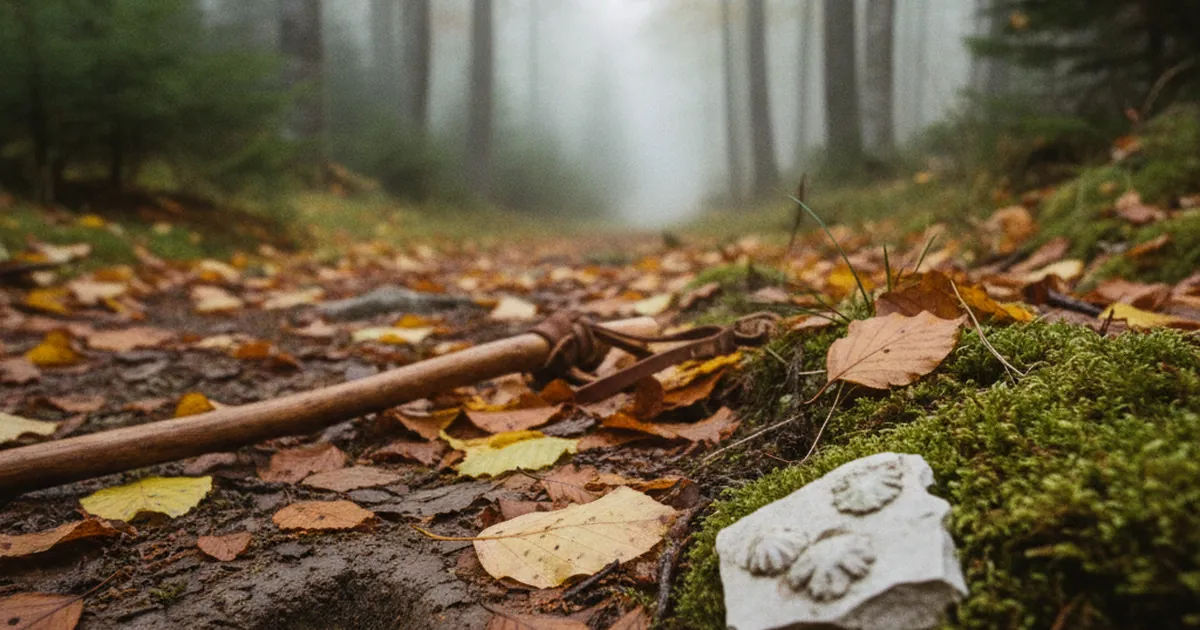
What sets beech forest apart ecologically is the density of the shade it produces. A mature beech canopy can intercept up to 95% of incoming sunlight. The forest floor is plunged into near-permanent half-light from May through November. Only species adapted to this extreme condition can establish themselves there over the long term.
In spring, before the leaves unfurl, a brief window of light allows certain plants to complete their entire cycle in a matter of weeks. Sweet woodruff (Galium odoratum) carpets the ground in white. Wild garlic (Allium ursinum), with its broad, shiny leaves, covers damp lower slopes and fills the air with a pungent, unmistakable smell. Wood anemone flowers before the beeches have even begun to open their buds.
By summer, the herbaceous layer is reduced to a few shade-tolerant ferns, ivy, and the ever-present woodruff. The bare ground, covered in dead leaves, takes on a characteristic ochre tint that contrasts with the vertical grey of the trunks.
The hidden life under bark and humus
Dead wood is the real wealth of an unmanaged beech forest. A fallen trunk can host several hundred different species over the course of its decomposition: wood-boring beetles including stag beetles and longhorn beetles, fungi growing as invisible filaments through the heartwood, mosses and lichens colonising the crumbling bark. A beech log can take several decades to fully break down.
Fungi play a central role in the beech forest. Beech trees maintain mycorrhizal relationships with dozens of species: milk caps, bay boletes, russulas, and various cortinarius species. These fungi colonise the tree's roots, helping it absorb water and minerals in exchange for sugars produced by photosynthesis. Harvesting all the fungi from a beech forest weakens the trees themselves.
Wildlife in the beech forest
The black woodpecker (Dryocopus martius), Europe's largest woodpecker, particularly favours old beech forests where it excavates its nesting cavities in the thickest trunks. Its distinctive call, somewhere between a screech and a mew, is one of the most recognisable sounds of these forests. Other species follow: the Eurasian nuthatch, the treecreeper, the hawfinch cracking open beech mast in autumn. The fat dormouse (Glis glis), a small nocturnal mammal, spends six months of the year hibernating in the cavities of old beeches.
Where to walk through Faucigny beech forests
In the Faucigny, many trails pass through beech woodland without hikers quite registering what surrounds them. The Pététoz forest route from La Ramaz is an itinerary devoted almost entirely to the discovery of old deciduous woodland and its associated understorey. On the flanks of Le Môle, the ascent from Saint-Jeoire passes through a fine belt of beech forest before reaching the upper pastures. Further east, the shaded slopes of the Giffre valley hold particularly impressive mature beech stands between Taninges and the high alpages.
- Early spring: ground flora in bloom, wild garlic, raking light through still-bare branches
- Autumn: copper tones, beech mast and mushrooms underfoot, low-angled sunlight between the trunks
- Summer: welcome coolness compared to more exposed high-altitude trails
A forest under pressure
Climate change is hitting beech forests at lower and mid altitudes first. Summer drought, increasingly frequent, stresses trees that cannot access groundwater as easily on some slopes. Since the mid-2010s, several French massifs have recorded dieback episodes on south-facing slopes. In the Faucigny, beeches on sunnier aspects are beginning to show signs of heat stress. How they respond over the long term remains an open question for forest ecologists.
Walking through a Faucigny beech forest is a way of touching that reality directly: not a static backdrop, but a living system in the process of adapting. If you want to hike in Haute-Savoie with a sharper eye for what surrounds you, it sometimes takes nothing more than slowing down for a few minutes on a forest trail and listening to what is happening beneath the bark.