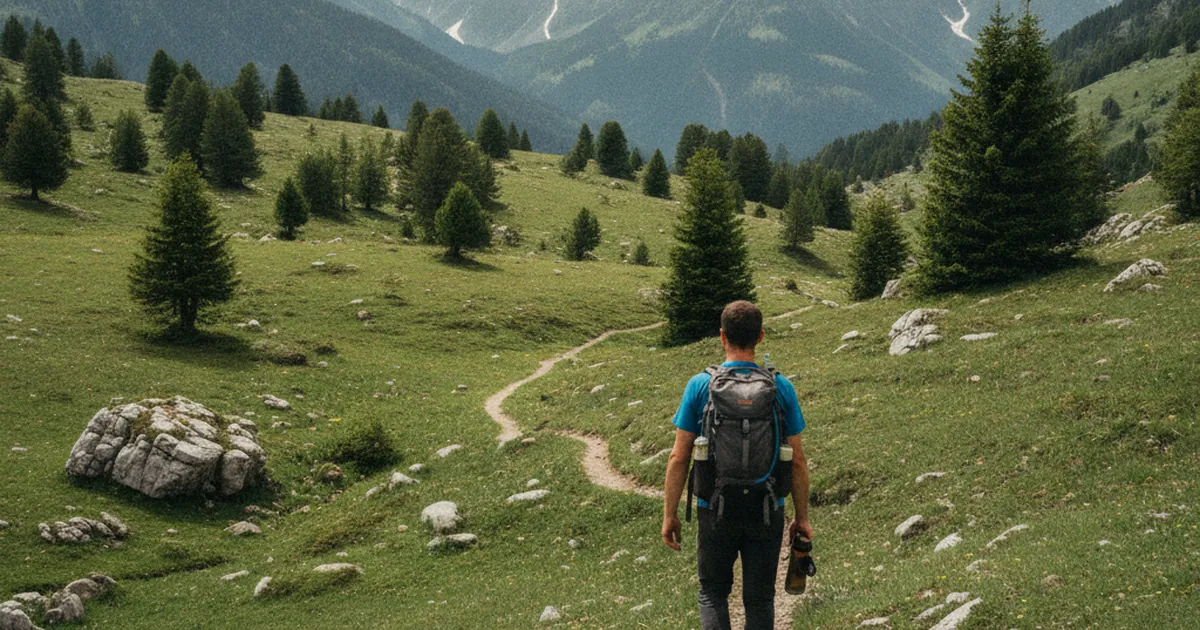
In summer, when the sun beats down on the ridgelines and you're grinding through vertical gain, dehydration catches up with you faster than you'd expect. It's not about physical toughness; it's basic body mechanics. You heat up, sweat, and lose water and minerals. If you don't compensate, your performance drops, cramps set in, and in severe cases the situation turns dangerous. Good hydration on a hike starts before you leave the trailhead and needs to be managed all day long.
How much water to carry?
The rule of thumb: 500 ml per hour of effort. On a 4 to 5-hour summer outing in the Prealps, that means at least 2 to 2.5 litres. For a longer hike with significant elevation gain, 3 litres is not excessive.
That figure shifts depending on:
- Temperature: above 30°C, sweat output roughly doubles.
- Effort level: a steep climb burns through water faster than a flat trail.
- Body size: a larger person sweats considerably more.
- Altitude: above 2,000 m, faster breathing increases fluid loss significantly.
If your route passes reliable water sources (high-altitude streams fed by snowmelt, well upstream of any grazing areas), you can lighten your starting load. But never count on a source you haven't confirmed in advance.
When to drink?
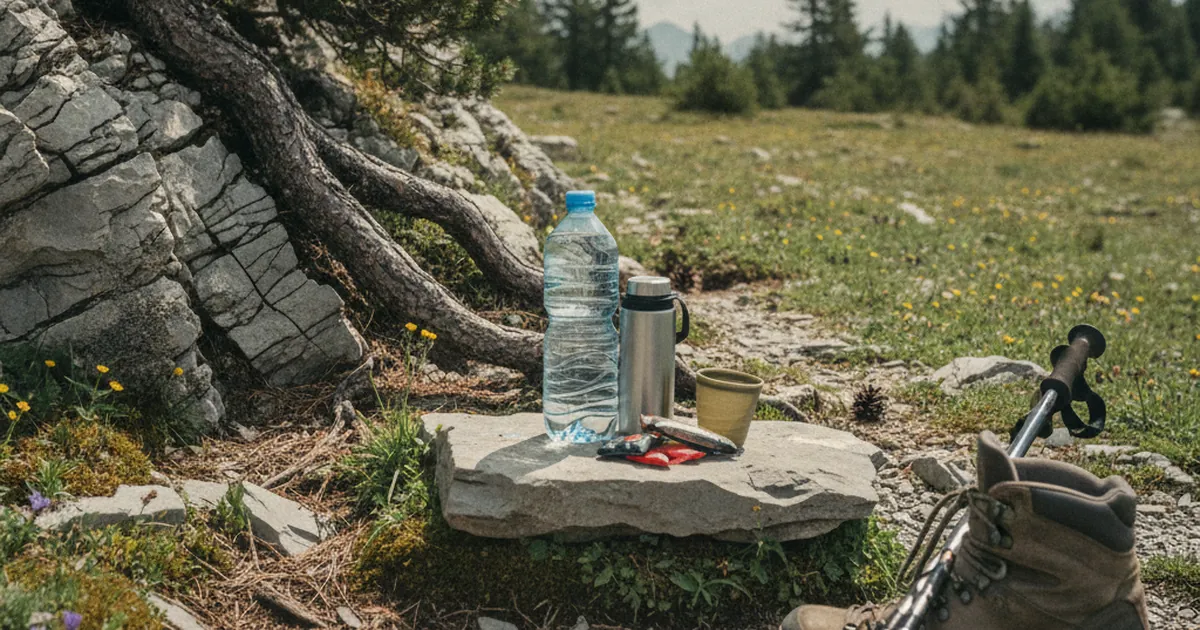
Don't wait until you're thirsty. Thirst is a delayed signal: by the time it kicks in, you're already running a deficit. The right approach is to drink at regular intervals, regardless of how you feel.
In practice:
- Drink 500 ml in the 30 minutes before you set off.
- On the trail, take 2 to 3 sips every 15 to 20 minutes, even when you don't feel like it.
- At each break, drink more and eat a little (even a handful of dried fruit helps).
- After the hike, rehydrate gradually rather than all at once.
In cold weather or at altitude, it's easy to forget to drink because you don't notice you're sweating. This is a classic mistake on early spring or autumn outings.
What to put in your pack?
Plain water is your foundation. For outings under 3 hours at a moderate pace, it's entirely sufficient. Beyond that, or on hard efforts with lots of elevation gain, you may need to replace sodium and carbohydrates as well.
What works well:
- Homemade isotonic drink: a pinch of salt and a teaspoon of honey in 500 ml of water. Simple, cheap, effective.
- Electrolyte tablets: lightweight and easy to carry, they dissolve straight into your bottle.
- Diluted fruit juice (50/50): useful if you struggle to drink plain water when exercising.
What to avoid:
- Soft drinks: too sweet, they trigger a rebound thirst and slow absorption.
- Alcohol: even a cold beer at a mid-route mountain hut speeds up dehydration.
- Large amounts of coffee: a mild diuretic that can worsen fluid loss.
Gear for carrying water
Two main options:
Rigid bottles (500 ml to 1 litre): easy to fill, durable, and odour-free if cleaned properly. The downside is you need to stop to drink.
Soft reservoirs with a drinking tube (1.5 to 3 litres): you drink without slowing down, which naturally encourages more frequent sipping. Perfect for sustained hikes. Make sure to dry them thoroughly after each use to prevent mould.
For long outings, combining both is often the best approach: a soft reservoir in your pack for drinking on the move, and a rigid bottle for refilling at springs or mountain huts.
Spotting the signs of dehydration
Learn to recognise the early warning signs:
- Dark urine (deep yellow or amber): drink immediately.
- Headaches mid-hike: often a hydration issue before it's an altitude issue.
- Muscle cramps: linked to losses of sodium and potassium.
- Dizziness or nausea: an advanced stage; stop and drink slowly.
If you notice these symptoms on the trail, move into the shade, drink 250 ml every 10 minutes and eat something salty. Don't keep climbing if the symptoms don't ease.
Matching your water plan to the route
Every hike is different. A short, shaded loop might need only a litre. A more committing outing like the Pointe de Nantaux or the Boucle des Hauts Forts, combining long ascents with open, exposed terrain, reasonably calls for 2.5 to 3 litres. Conditions also shift with geography: in the Chablais, summers can be particularly hot on exposed ridgelines, and what worked in May may not be enough come July.
When hiking across Haute-Savoie, hydration is one of the foundations of mountain safety, on a par with solid footwear and checking the forecast. Take the time to plan your water supply before each outing, and adjust as conditions and your own body dictate.