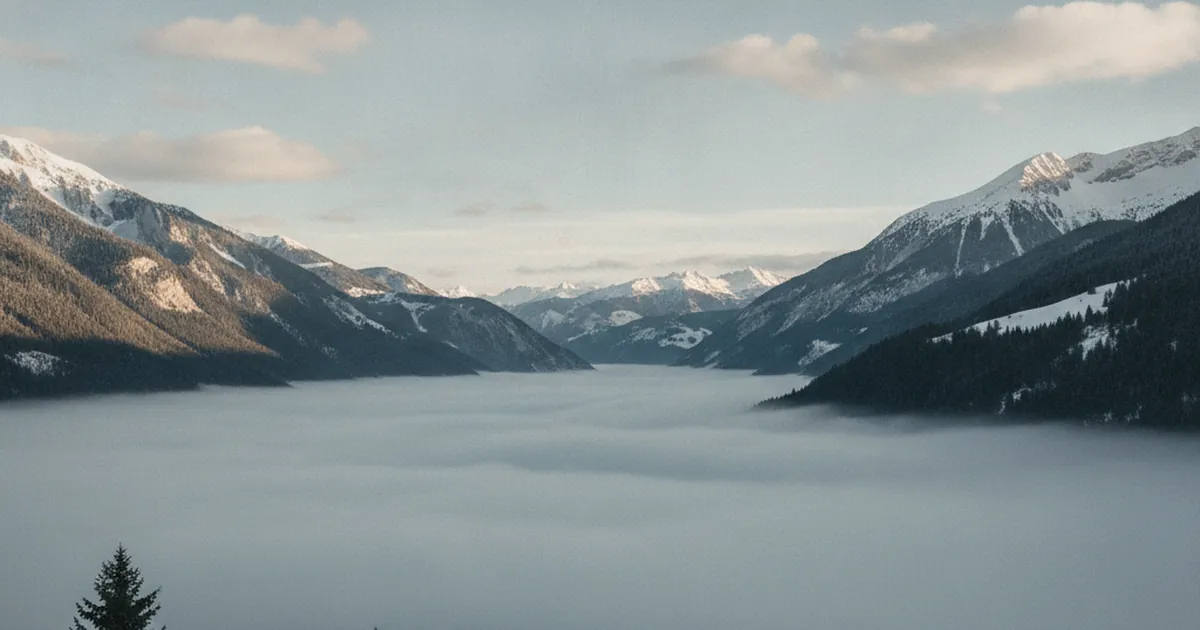
You're in the valley, wrapped in fleece, and you spot someone coming down from the summit in a t-shirt. In December. They're not crazy. What you're witnessing is a temperature inversion: a weather phenomenon that flips the usual logic and makes high mountain air warmer than the valley floor. Understanding it is key to making the most of the best winter days for hiking in Haute-Savoie.
The normal rule: temperature drops with altitude
Under standard atmospheric conditions, temperature decreases as you gain elevation. The average rate is around 0.6 degrees per 100 metres of altitude. So if you leave a village at 600 m with 10 degrees, you'd expect roughly 4 degrees at a 1,600 m pass. That's what gives the high mountains their cold, austere character and their lasting snowfields.
But this rule is not absolute. During anticyclonic conditions, particularly in autumn and winter, the atmosphere can behave in reverse. That's the temperature inversion.
Why cold air settles in the valleys
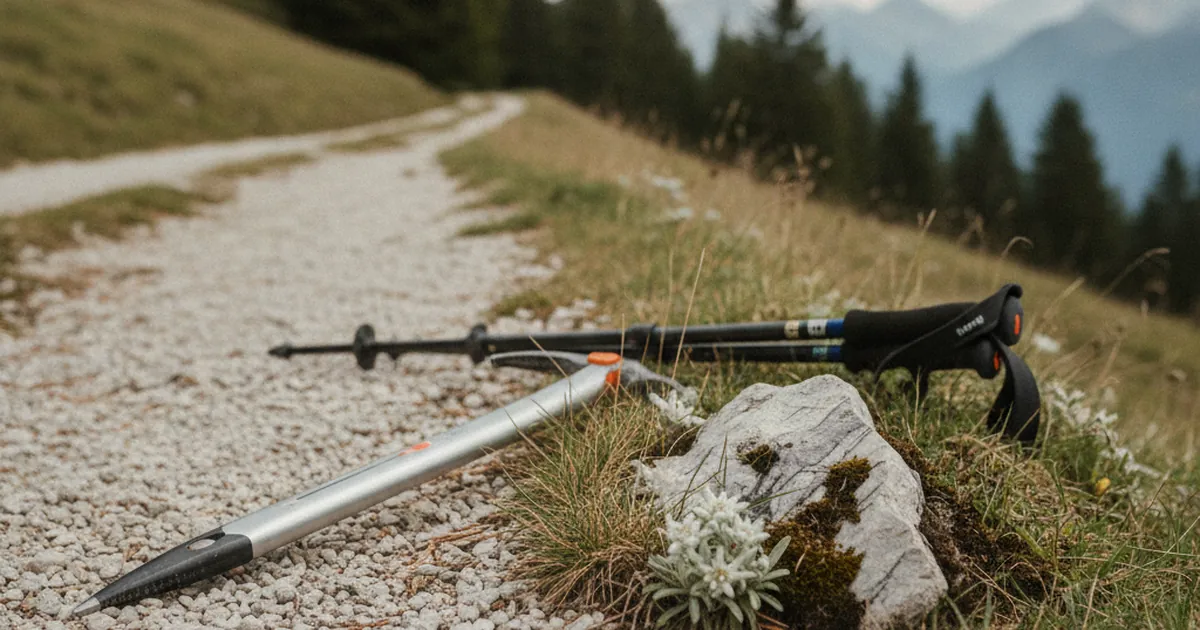
Cold air is denser than warm air. At night, slopes lose heat by radiation: warmth stored during the day escapes into a clear sky. The air in contact with these cooling slopes becomes cold and heavy, and slides downhill, pooling in valley floors like water filling a glass.
Under high-pressure conditions, the atmosphere is stable and winds are weak or absent. Nothing stirs the air layers together. Cold air locks into the low ground and stays there, while the air above remains mild. The result can be striking: just a few hundred metres above the valley floor, the thermometer can read several degrees warmer.
The sea of clouds: the visible sign of inversion
When the cold air trapped in the valleys reaches its dew point, moisture condenses into fog or low stratus clouds. Valley floors disappear under a white, cotton-like blanket: the famous sea of mist, or "mer de brume." In the Giffre Valley and the Arve Valley, this is a common sight from October to February.
Villages sit locked in grey and cold while high pastures and ridgelines bask in brilliant sunshine. Rising just a few hundred metres is enough to break through to the other side, leave the cold fog behind, and find unexpected warmth and light.
How high does the inversion ceiling sit?
This is the key question before choosing your route. The inversion ceiling is the boundary between the cold air below and the mild air above. It varies, but in Haute-Savoie it often sits between 800 and 1,500 metres. Sometimes higher, sometimes lower.
To estimate it, look for these clues:
- Watch the cloud or fog top from an elevated vantage point.
- Check Météo France altitude temperature data and mountain weather bulletins.
- Feel it as you climb: you'll find the ceiling when the light suddenly intensifies, the air changes quality, and the temperature rises noticeably.
If the ceiling sits around 1,000 m, any route reaching 1,500 m or above puts you into the inversion layer. Hikes like Pointe de Nantaux at 2,170 m or Pointe de Chalune via la Ramaz take you well clear of any cloud deck in these conditions.
Spotting and forecasting an inversion
Several signals let you identify an inversion before you set out:
- A well-established anticyclone over western Europe, with high pressure (1,025 hPa or more).
- Clear, windless nights: the ideal conditions for radiative cooling of slopes.
- Morning fog or low cloud sitting in valley floors while ridgelines are already blue sky.
- Mountain weather bulletins from Météo-France explicitly mentioning "inversion thermique."
In the Aravis and Bornes massifs in winter, these conditions sometimes persist for several days in a row. That's the perfect window to grab your poles and gain some elevation.
An invitation to climb higher
Temperature inversions change how you approach winter outings. Instead of writing off the day because the village is grey, you check the mountain forecast, gauge the cloud ceiling, and if the inversion is in place, you head uphill. The effort of starting in the cold and gloom is richly rewarded when you burst through the cloud top and feel the full force of mountain sunshine on your face.
For those discovering Haute-Savoie for the first time, it's one of the most memorable sights these mountains offer: a golden sea of cloud at your feet, Alpine ridgelines cutting the horizon, total silence. Temperature inversion is not just a meteorological quirk. It's an invitation to gain altitude.