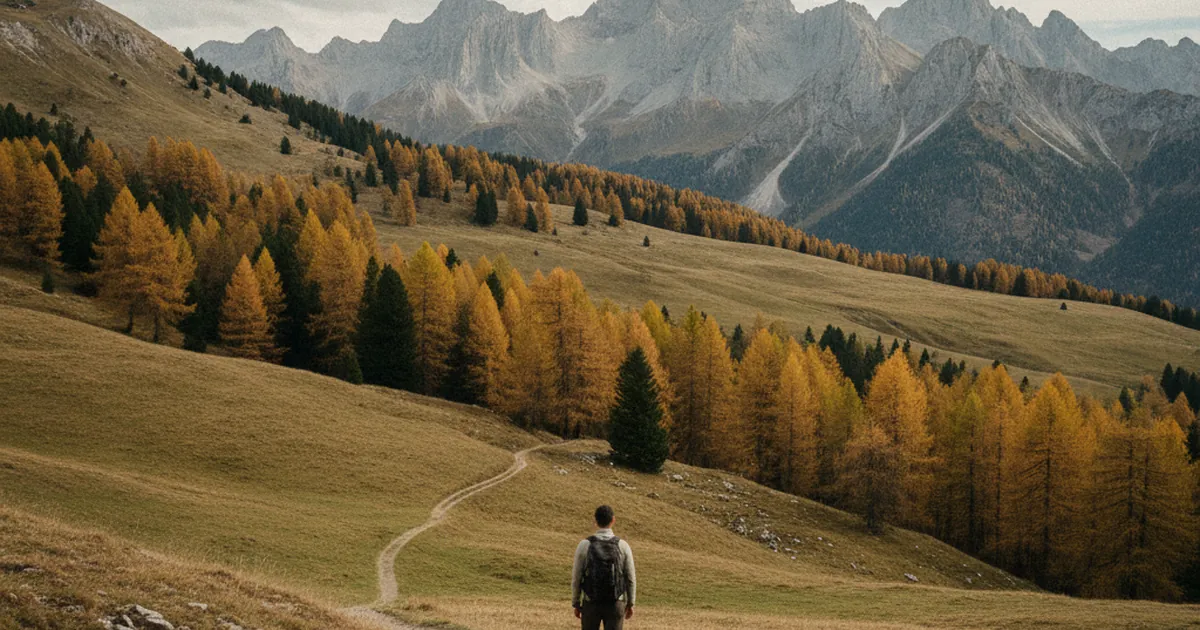
The larch is an anomaly among conifers. While firs, spruces, and pines hold on to their needles year-round, the larch drops them every autumn, after turning them a deep gold that lights up the Alpine slopes. In Haute-Savoie, this display is one of the most beautiful of the cold season. If you hike in the mountains at this time of year, the trails of Haute-Savoie offer a particular light, warm and golden, that stays with you long after.
A deciduous conifer
There are two broad categories of trees: deciduous trees, which shed their leaves in winter, and conifers (or evergreens), which keep theirs. The larch belongs to the Pinaceae family, alongside spruce and Scots pine. Yet it behaves like a deciduous tree: it sheds its foliage every year.
In Europe, the European larch (Larix decidua) is the only native conifer to do this. This characteristic often leads to misidentification: in summer, its short, soft needles in bright green resemble those of a spruce. In autumn, there is no longer any doubt.
Why do the needles turn yellow?
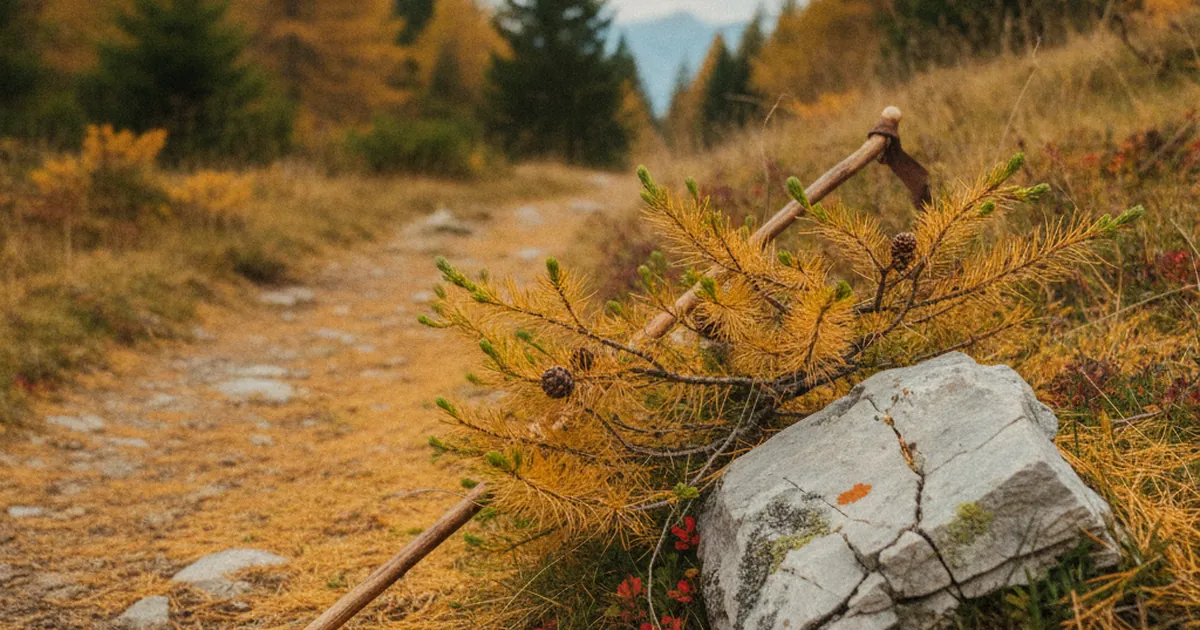
The larch's yellowing follows the same mechanism as the colour change in deciduous trees. As winter approaches, the days shorten and night temperatures drop. The tree picks up these signals and triggers a series of physiological changes.
Chlorophyll, the green pigment that drives photosynthesis, gradually breaks down and disappears before the other pigments. Carotenoids, responsible for yellow and orange hues, were already present in the needle but masked by the chlorophyll. Once it fades, they become visible. This is what gives the larch its characteristic gold colour.
Unlike maples or beeches, the larch does not produce anthocyanins, which are responsible for red tones. Its palette is limited to yellows, ranging from pale straw to deep amber depending on the exposure and altitude.
When is the best time to see it?
The exact date varies from year to year depending on summer weather and the first frosts. As a general rule, larch forests in Haute-Savoie begin to turn at the end of September, peaking around the first two weeks of October.
Altitude plays a key role in the timing. Larches at higher elevations change colour first. If you head up into the mountains early in the season, you can catch the yellowing at altitude while the lower forests are still green. A few weeks later, the mid-altitude forests follow.
To avoid missing the show, watch the night temperatures after mid-September. Once nights regularly drop below five degrees in the mountains, the clock starts ticking. The transformation is swift: two to three weeks often separate the first signs of colour from the needle fall.
Where to see the finest larch forests in Haute-Savoie?
The larch colonises sunny slopes and high-altitude zones, from around one thousand to over two thousand metres in the Alps. In Haute-Savoie, several areas offer excellent opportunities to see them at their best.
The Vallée du Giffre is one of the richest. Around Sixt-Fer-à-Cheval and Morillon, the high-altitude alpine pastures are lined with larches that put on a spectacular show in October. The hike to Lac de Gers and the Refuge de Sales passes through areas well-stocked with larches at this time of year.
The Chablais also has fine larch forests, particularly on the heights above Morzine and Les Gets. In the Aravis, the sun-facing slopes shelter remarkable larch stands in autumn.
One rule applies across all these areas: choose a sunny day. Under an overcast sky, the gold of the larch loses its brilliance. It is in the low-angled light of morning or evening that the display is most striking.
A pioneer and resilient tree
The larch is what ecologists call a pioneer species. It can establish itself on poor soils, scree slopes, and hillsides where other trees struggle to take hold. Its cold tolerance is remarkable: it withstands extremely low winter temperatures, which explains its presence at high altitudes.
Shedding its needles is an adaptation to this demanding environment. By standing bare in winter, the larch avoids the damage caused by heavy snow loading on persistent foliage. It also reduces its water needs during the period when the ground is frozen. Come spring, it buds quickly, and its young bright-green needles signal the return of vegetation on slopes still covered in snow.
Its wood, very dense and rich in resin, is exceptionally durable. It was long used in Alpine construction, particularly for the chalets and barns of mountain villages.
Planning your autumn outing
Watching larches in autumn means hiking in changing conditions. Days shorten, temperatures fall quickly at altitude, and the first frosts can make paths slippery. A few precautions are worth keeping in mind:
- Start early to catch the morning light on the forests.
- Bring warm layers even if it feels mild at the trailhead: wind can be strong at altitude.
- Check the weather forecast the evening before, especially for high-altitude outings.
- Wear waterproof footwear: dew and early melting snow make paths wet underfoot.
The larch season is brief. It rewards a little attention and good timing, but the payoff matches the spectacle. To discover more seasonal atmospheres in the mountains, hiking in Haute-Savoie takes on a whole new dimension when the forests catch fire with autumn colour.