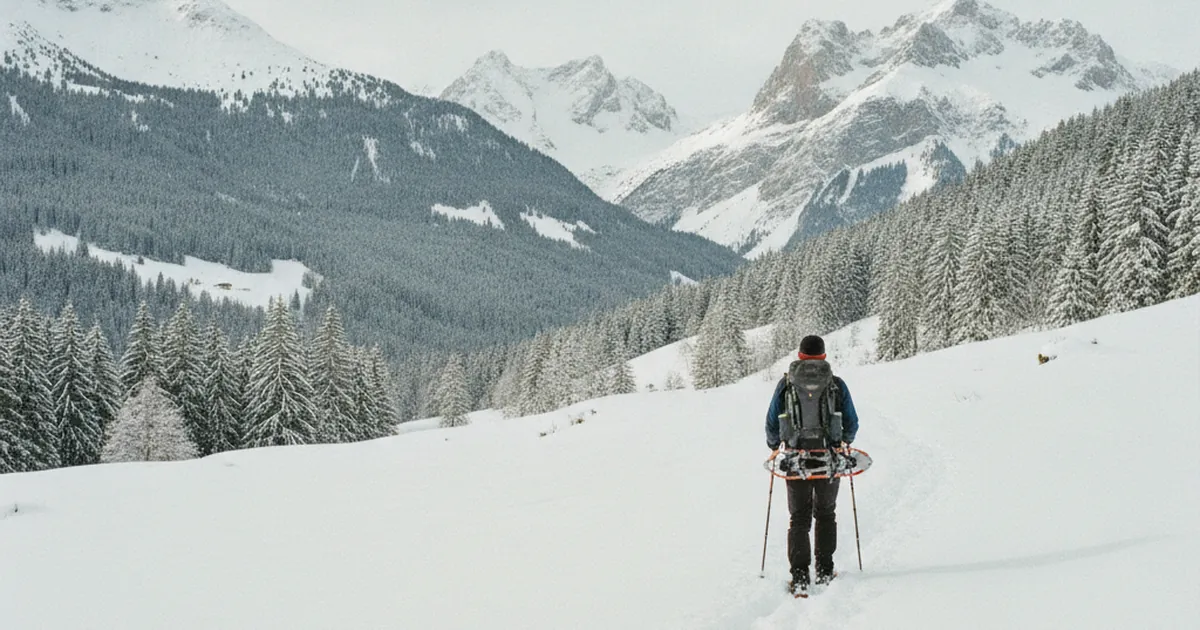
You check the forecast from the valley: it snowed overnight above 1,200 metres. Time to pull out the snowshoes? Not necessarily. Switching to snowshoes follows specific criteria, and ignoring them leads either to a frustrating outing on unsuitable snow or to unnecessary effort when simple micro-spikes would have done the job. Here are the practical benchmarks to help you decide.
Snow depth is not the deciding factor
A 20-centimetre snowfall does not automatically call for snowshoes. What matters is consolidation. Fresh powder fallen at low temperatures carries weight poorly even when deep: your foot sinks with every step, and snowshoes distribute that load to keep you moving smoothly. By contrast, snow compacted through a freeze-thaw cycle creates a firm surface where light crampons are enough.
A practical test: if you sink more than 15 centimetres with every normal step, snowshoes become genuinely useful. Below that, it is often a question of comfort rather than necessity. Run the test in the first few metres from the car, not after an hour of walking.
The time of departure also matters. Early morning, the refrozen crust is firm and supportive, making snowshoes unnecessary. Two hours later, spring sunshine softens the snow and you may sink to your knees. The switch to snowshoes can happen mid-outing, not only at the start.
Flat ground, forests, alpine plateaus: the ideal conditions
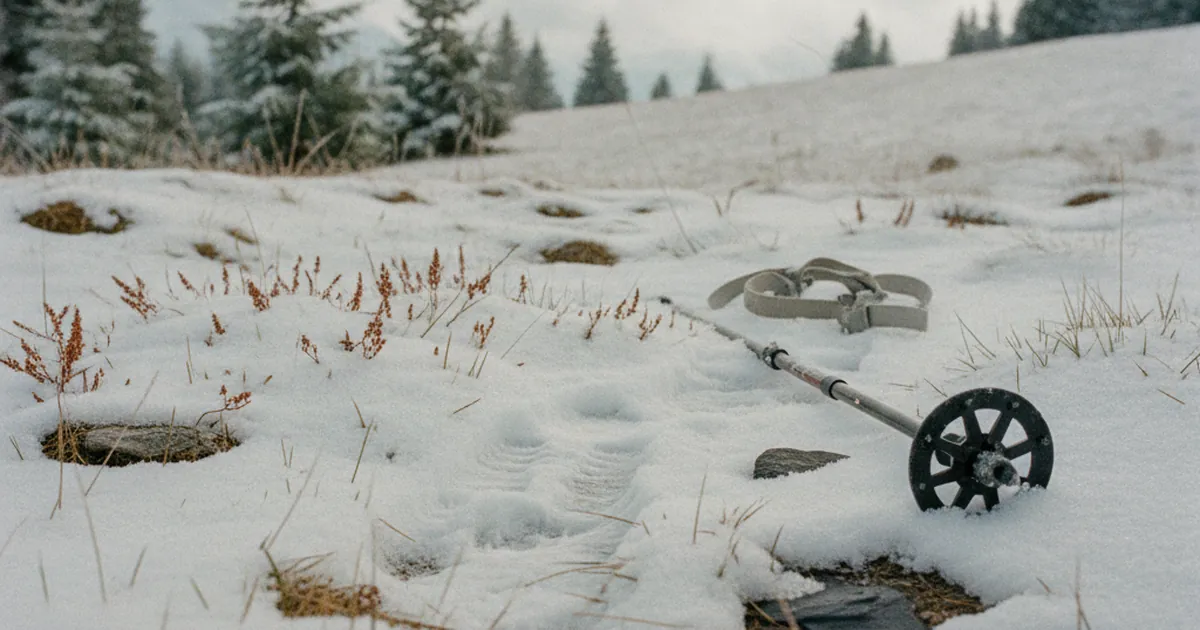
On flat or gently sloping ground, snowshoes turn an exhausting slog into a pleasant walk. On steeper terrain, the heel lift built into the frame eases calf strain on the way up. On steep descents, some models offer limited grip: always check your snowshoe crampons before venturing onto exposed slopes.
Snowy forest paths are often the first playground for snowshoers. Under tree cover, snow stays powdery longer, even after a freeze-thaw episode. The forests of the Giffre valley and the beech woods of the Faucigny offer woodland routes perfectly suited to early-season outings.
Alpine plateaus concentrate the ideal conditions: limited elevation gain, open views, and consistent snow cover. The Sommand area, reached from Mieussy, is the classic example. The loop from Le Jourdy offers a plateau route suited from the first consolidated snowfall, with no commitment to difficult terrain.
The best sectors in Haute-Savoie
In the Giffre valley, the alpages above Morillon and Verchaix, along with the slopes around La Ramaz, provide excellent conditions in mid-winter. The snow holds well and the elevation gains stay manageable. The Pététoz forest loop, accessed via La Ramaz, is a go-to route for early-season snowshoers.
In the Aravis-Bornes range, north-facing slopes hold dry powder longer, particularly around the Col des Aravis. Conditions there are often more stable than in lower valleys, and the plateau routes offer steady progress well suited to the short days of December and January.
Further south, the alpages around Annecy and the Bauges offer snowshoe terrain from around 1,000 metres in a good snow year. The forested plateaus are less exposed to wind than the higher massifs, making them a solid choice after a fresh snowfall.
The spring transition: wet snow and late snowfields
In March and April, snow becomes treacherous. Morning brings a firm, supportive crust. By afternoon, snowmelt turns the surface into a slushy trap. Wide-platform snowshoes help less than you might think: they spread the load well, but wet snow sticks underneath and adds considerable weight to every step.
A very early start, before 8 a.m., often lets you take advantage of the frozen crust without any special equipment. This is also the season when late snowfields can catch you off guard on routes that are normally clear. If the trail description mentions a north-facing section above 1,800 metres in April, pack the snowshoes even if the valley is green.
Snowshoes are not safety equipment in the strict sense. They cover the range from soft to consolidated snow on moderately steep terrain, but they do not replace crampons on hard ice or an ice axe on a steep slope. On the trails of Haute-Savoie in winter, snowshoes are the tool for accessible mountain walking, not for technical alpine climbing.
In short: sinking depth, slope, time of day, and location are the real criteria. A well-judged snowshoe outing remains one of the best ways to explore the Savoyard mountains in winter, far from crowded ski resorts and in close contact with a landscape that changes week by week.