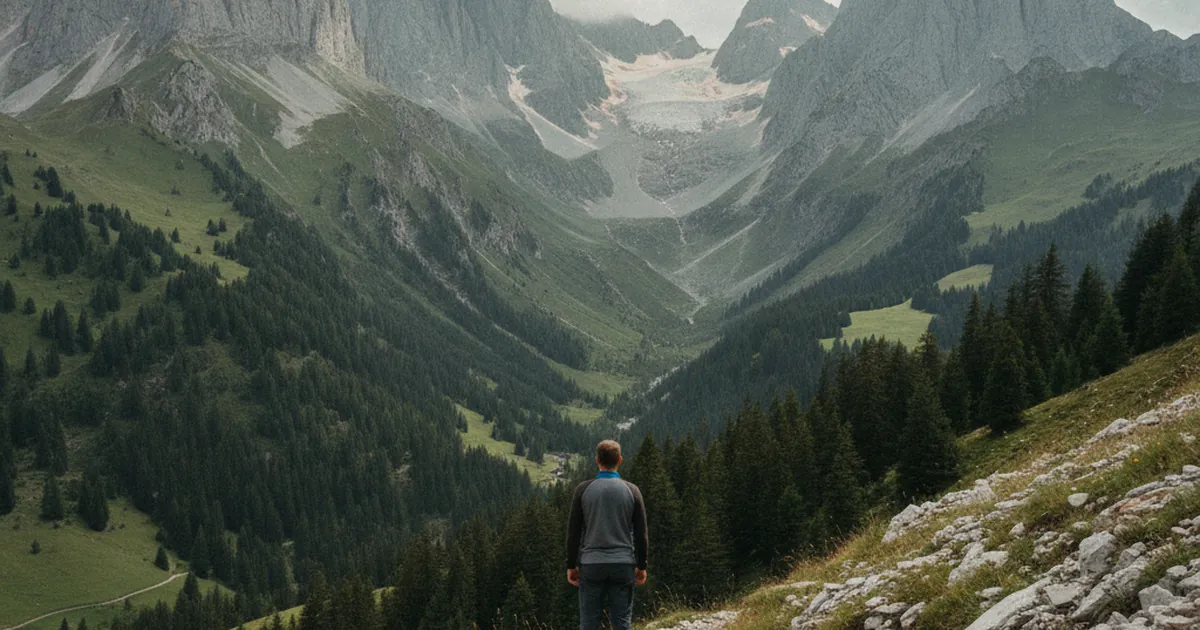
The PGHM of Chamonix, short for Peloton de Gendarmerie de Haute Montagne, is one of France's busiest mountain rescue units. Every summer, its gendarme-alpinists respond to incidents across the Mont Blanc massif: injured hikers, trapped climbers, missing persons. If you've spent time hiking the trails of the French Alps and seen the yellow-and-red safety helicopter cutting across a valley at speed, there's a good chance it was them. Here's who they are and what they actually do.
Founded in the 1950s to Meet a New Challenge
The Chamonix PGHM is one of the oldest mountain gendarmerie units in France. It was established in the 1950s, when visitor numbers to the Mont Blanc massif were rising fast but conventional emergency services had no training or equipment for glaciers and vertical terrain. Specialist gendarmes with strong alpine skills were assigned to fill that gap, and the unit has developed steadily ever since.
Today, the PGHM covers the entire French side of the Mont Blanc range, and also participates in cross-border operations with Italy and Switzerland on shared high-altitude terrain.
Who Are the PGHM Officers?
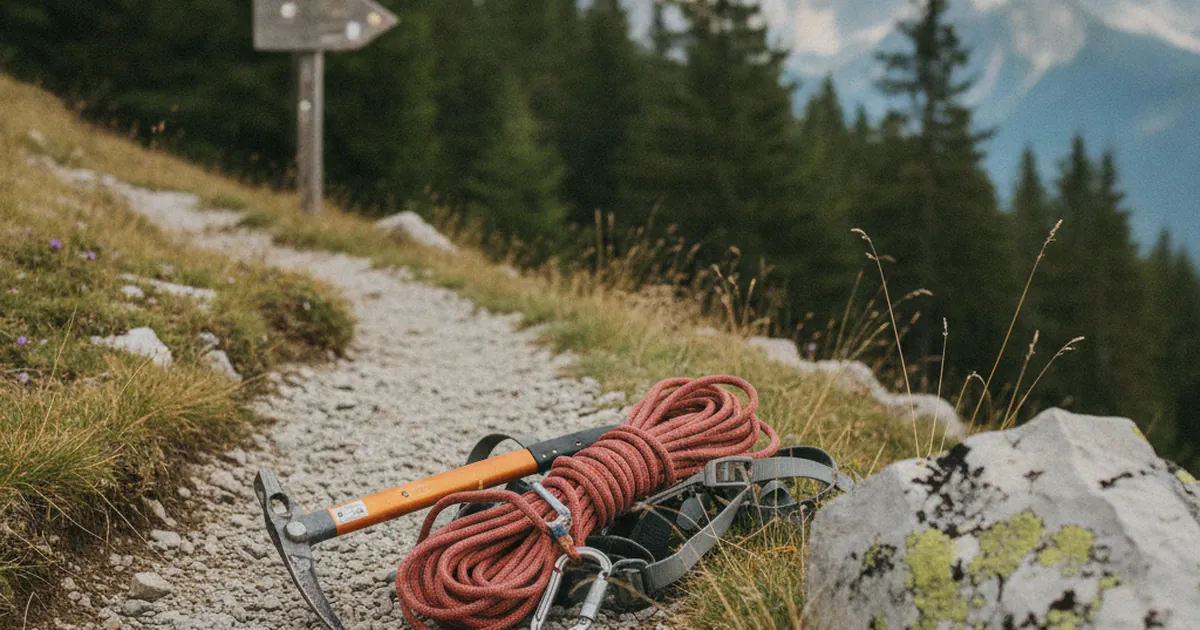
A PGHM officer is not an ordinary rescuer. They are first and foremost a member of the French National Gendarmerie, a military force, who then completes specialist high-mountain training. Candidates must already hold a strong level in alpinism and ski mountaineering before they can even apply. A rigorous selection process then leads to qualification training at the ENSA, the National School of Skiing and Alpinism, based in Chamonix itself.
Once qualified, these officers combine roles that are normally split across separate specialists: high-altitude climber, wilderness paramedic, forensic investigator, and prevention advisor. Many have also completed advanced medical training adapted to emergency care in remote locations far from any hospital. It is a physically demanding career from start to finish, with constant fitness work, regular flights, and fieldwork in all weather conditions.
A Mission That Goes Well Beyond Rescue
The image of a helicopter winching someone off a cliff face is what most people associate with the PGHM, but the unit's mandate is broader than that.
- Mountain rescue: when a hiker falls, a climber gets pinned down by deteriorating weather, or someone is caught in an avalanche, PGHM officers respond, often alongside the SMUR medical team for cases requiring immediate clinical care.
- Search and missing-person operations: in the mountains, a person who fails to return on time can trigger a multi-day search. The PGHM coordinates these operations, sometimes using tracking dogs and drones alongside foot patrols.
- On-trail prevention: in peak season, gendarmes patrol popular routes and alpine approaches to advise hikers, redirect those taking undue risks, and close access points when conditions become dangerous.
- Judicial investigations: when an accident proves fatal, the PGHM is responsible for the inquiry. Reconstructing a fall, a rope failure, or an avalanche trigger is a routine part of their work, though rarely talked about publicly.
Helicopter Winch Rescue: A French Strength
France has built one of the most efficient helicopter rescue systems in the Alpine world. A winched extraction from a vertical face or steep couloir can be completed in minutes, compared to hours for an equivalent ground-based operation. The aircraft used are designed for high-altitude flight and demanding meteorological conditions.
That efficiency has real limits, though. Low cloud, high winds, or poor visibility ground the aircraft, and ground teams take over. Response times lengthen significantly in those conditions. It is worth remembering even in well-covered areas like the Arve Valley or the Pays du Mont-Blanc region: rescue is never instantaneous, and self-sufficiency in the mountains always matters.
What This Means for You as a Hiker
Knowing the PGHM is out there is reassuring. Knowing how to stay out of their call log is more useful. A few practical steps before any high-altitude outing:
- Always tell someone your planned route and your expected return time. In a missing-person situation, that information is invaluable to search teams.
- Check the official mountain weather forecast the evening before and again on the morning of your hike. Conditions can change fast once altitude increases.
- Carry an IGN map and know how to read GPS coordinates. Giving your exact position to emergency services via 112 can make a real difference to how fast help arrives.
- Match your objectives to your actual skill level. On summits such as Pointe de Nantaux or Pointe de Sales, conditions can shift fast when cloud rolls in or the terrain turns mixed, and the exposure to risk increases with every metre of altitude gained.
The emergency number for mountain incidents is 112, reachable from any network even with partial signal. Emergency coordinators will then alert the PGHM based on your location and the nature of the incident.
The Chamonix PGHM embodies a distinctly French tradition of mountain rescue: military structure combined with elite alpinism. Their presence makes the high mountains more accessible and safer for everyone, but it is not an invitation to underestimate the real risks of the terrain. The best PGHM intervention is the one that never has to happen.