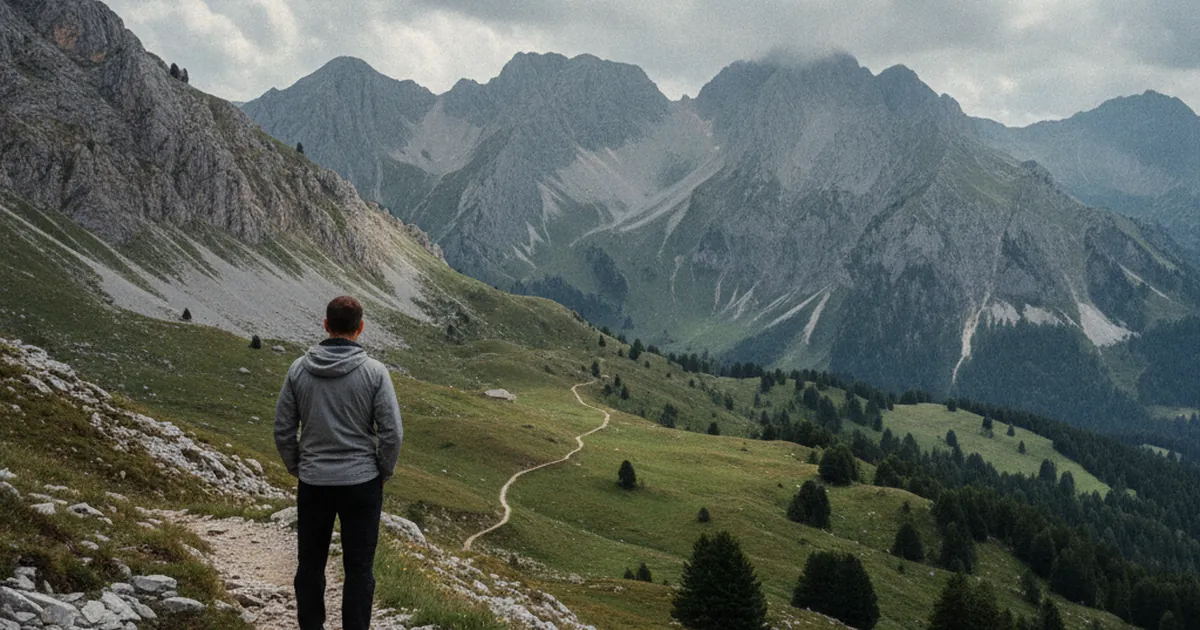
In hiking, the most important decisions are rarely made at the trailhead. They happen on the trail itself, when the mountain, the sky, and your own body start sending signals you can no longer ignore. Turning back is not failure. It is one of the most essential skills a hiker can build, and often the hardest to learn. In the mountains, the ability to step back with a clear head is what sets the experienced hiker apart from the reckless one.
Weather: watch it before and during
Weather is your first filter. Before you set off, consult a dedicated mountain forecast, not just a smartphone app. Once on the trail, direct observation takes over.
Concrete warning signs to take seriously:
- Skies rapidly clouding over from the west or northwest.
- Wind shifting direction, intensifying, or becoming erratic without obvious reason.
- Cauliflower-shaped clouds (cumulus congestus) building up early in the morning.
- A smell of rain or ozone, sometimes detectable before the storm actually arrives.
In Haute-Savoie, convective storms can develop extremely fast on summer mornings. On a demanding route like the Col des Follys via Lac de Vallon, in the Vallée du Giffre, a late start combined with an unstable sky is a classic mistake. Turning back from the ridge in hail is far less pleasant than doing so at the halfway point.
Your physical state, and your group's
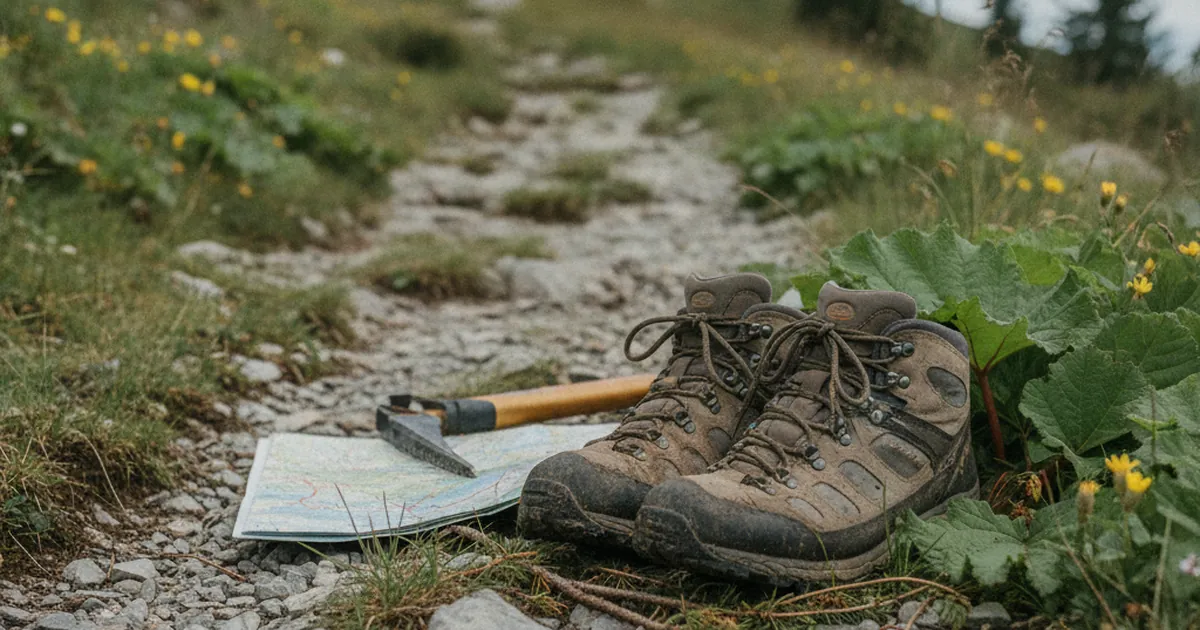
Your body sends warning signals long before it gives out. The problem is that we tend to ignore them when the summit is close, or when we have already put in a lot of effort.
Pay attention to:
- Persistent headaches, which can point to altitude issues or dehydration.
- Repeated cramping or shaking legs on the descent.
- Nausea or dizziness that returns more than once.
- An unexplained drop in motivation, sometimes a sign of low blood sugar.
- A group member lagging significantly behind, or unusually quiet.
In a group, the decision to turn back is collective. If someone is genuinely struggling, the summit can wait. Even on accessible routes like the Chapelle de Jacquicourt via Les Lanches, situations can change fast. The mountain will always be there to try again.
When the terrain changes the rules
Conditions on the ground can look nothing like the route description. In June and July, late snow patches are common on north-facing slopes, even on trails rated "easy" in dry conditions. A snow slope crossing a steep face, without crampons or an ice axe, is a genuine risk.
Other situations that call for a quick decision:
- A trail that fades or disappears under dense vegetation.
- A crossing that was straightforward on the way up but dangerous after rain (swollen stream).
- Ice on rocks at altitude, invisible from below.
- No waymarks, or very sparse ones, in thick fog.
It is not the map that is right, it is what you see in front of you. And what you see in front of you can justify turning around, even with a hundred metres left to the col.
Time: a criterion hikers regularly underestimate
People often calculate the ascent time, rarely the descent, and almost never leave margin for the unexpected. A useful rule: if you are not two-thirds of the way through the route at the halfway point of your planned time, start seriously considering a turnaround.
In summer, daylight lasts long in Haute-Savoie, but that does not change the fact that a technical descent in the dark, without a fully charged headlamp, is reckless. On the trails of the Aravis-Bornes massif, mountain rescue teams regularly assist hikers who misjudged their pace.
A rough guide: allow 300 metres of elevation gain per hour for an average hiker, 200 metres of descent on easy terrain, and always leave at least an hour of buffer for the unexpected.
Telling your group you want to turn back
Social pressure in hiking is real. Nobody wants to be the one who forces a turnaround. Nobody wants to look like they are giving up. Yet most mountain accidents happen because someone stayed silent instead of saying "I would rather head down."
A few direct phrases that work:
- "I am not comfortable on this section. Can we talk about it?"
- "The weather is worrying me. Let's assess together."
- "I need to head back. Who is coming with me?"
A solid group makes the call together, and no one continues alone if another member is struggling. When you hike solo, the rule is even simpler: you decide, you own the outcome. Be honest with yourself.
Turning back is choosing to hike for a long time to come. On the trails of Haute-Savoie, there is no shortage of beautiful walks, and every mountain can be tried again in better conditions. The peaks are not going anywhere.