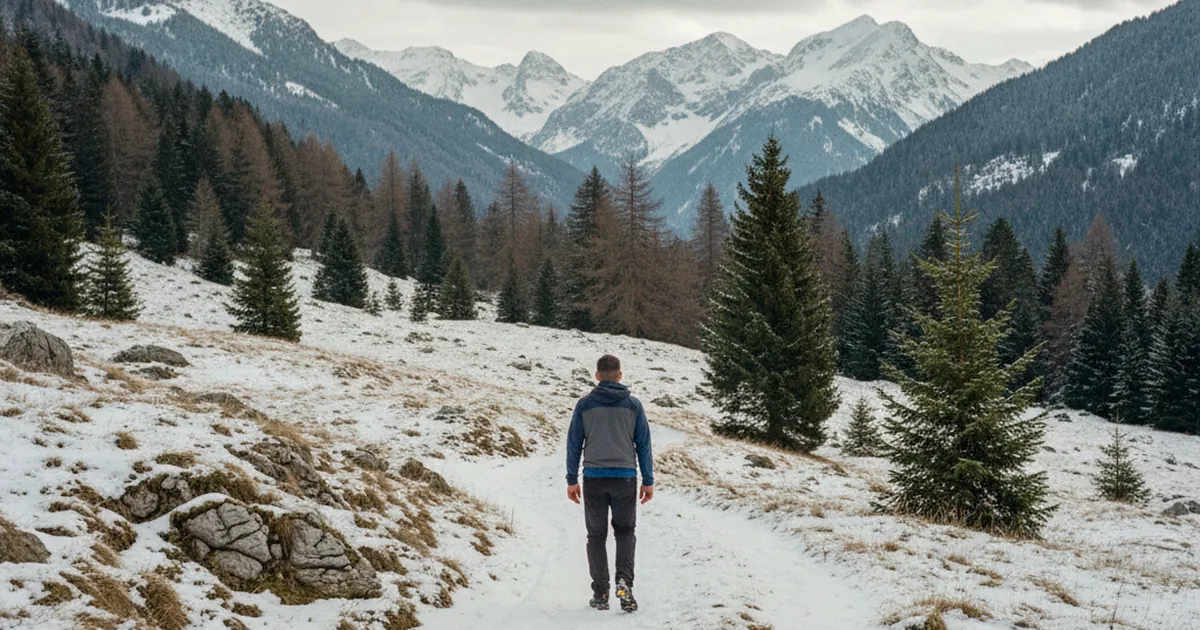
Every autumn, the same question comes up when the first snow falls: do you really need snowshoes to keep hiking, or can you leave them behind? The good news is that you can hike in Haute-Savoie all winter without snowshoes across many areas, as long as you pick the right route and pack the right gear.
The snow line: altitude and aspect make all the difference
In Haute-Savoie, snow typically settles permanently above 900 to 1,200 metres, depending on the year, aspect, and weather patterns. Below that threshold, trails often stay walkable throughout winter, especially on south-facing slopes and in valley bottoms.
That said, this is never a hard rule. A prolonged cold snap can blanket low-lying forests for weeks, while a January thaw can clear them just as quickly. The key is to check real conditions before heading out, look at local forecasts and recent trail reports, and never rely solely on a theoretical snow line.
What terrain to look for in winter without snowshoes
Some route types stay accessible in winter even without snowshoes:
- Lakeside paths. Lakes create a slightly milder microclimate. Shoreline trails often stay snow-free even in mid-winter.
- Gorges and low forest paths. Sheltered from wind and direct sun, these dry out faster after a snowfall. The Chéran gorge and the Bauges forest floors are good examples.
- Low hills around Annecy or Bonneville. Trails below 800 metres on sunny aspects often remain walkable all winter with no special gear.
- Forest routes in the Aravis-Bornes. This massif offers plenty of forest paths below 1,000 metres that require no snowshoes in mild winters.
What to pack when you leave the snowshoes at home
Even without snowshoes, a winter outing demands proper preparation. Trails can be icy, muddy, or slippery in unexpected spots. Here is what to bring:
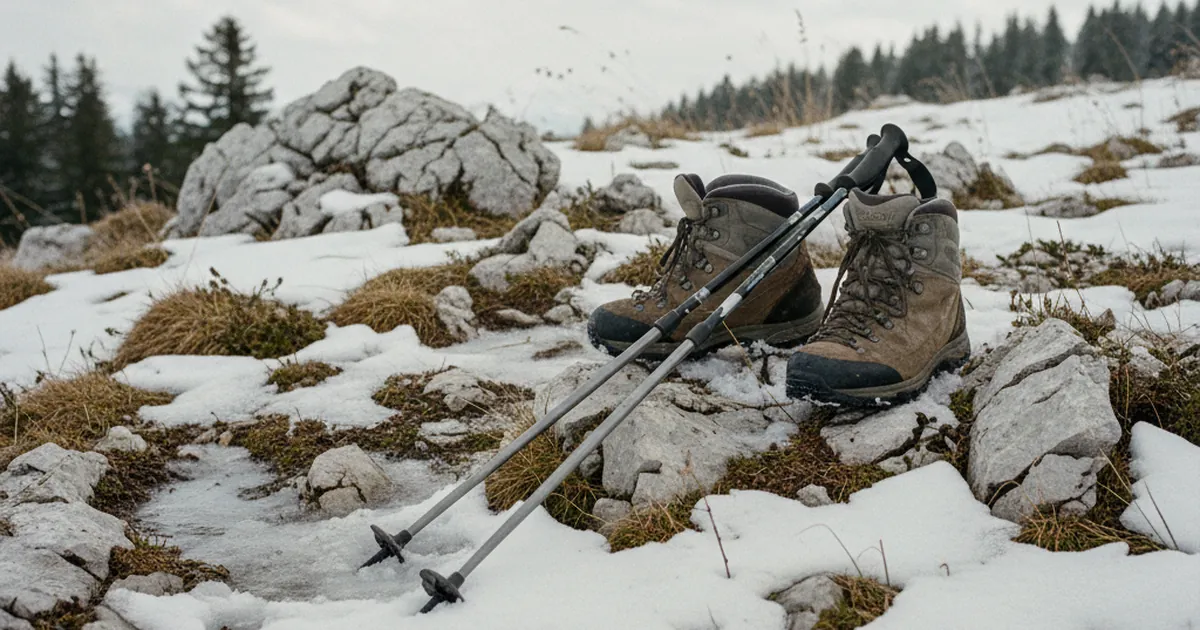
- Waterproof boots with a grippy sole. Winter moisture is everywhere: slush, mud, frosty bridges. A solid pair of waterproof hiking boots is non-negotiable.
- Lightweight traction devices. Products like Microspikes or equivalent strap-on crampons clip onto any boot in seconds and turn a slippery descent into a safe walk. They pack down small and cost far less than snowshoes. They are the single most useful winter investment for a hiker who does not want to carry full snowshoe kit.
- Poles. On a snow-covered or icy trail, poles help you test the ground and stay balanced on the way down.
- Layered clothing. Cold hits fast when you stop moving. Pack a mid-layer and a waterproof shell, even when the forecast looks calm.
Three routes accessible in winter without snowshoes
Here are some concrete options that stay doable in a mild winter:
- The circuit around Lac de Montriond from Ardent, in the Chablais, is a very easy low-altitude loop around a spectacular glacial lake. The forest trail usually stays clear or manageable with light traction devices.
- Les Maisons de Duingt follows the shore of Lake Annecy on a short, scenic walk that is almost always accessible in January, with great views over the Bauges. Duingt is an ideal base for winter lakeside outings.
- Le Pont de l'Abîme from Cusy drops into the Chéran gorge through low-altitude forest. This short, easy circuit starting from Cusy is typically snow-free except in the snowiest winters.
When to turn back and reach for the snowshoes
There are situations where heading out without snowshoes becomes genuinely dangerous:
- Slopes steeper than 15 degrees with hardened or icy snow
- North-facing trails above 1,000 metres that have not seen sun recently
- After a hard overnight freeze on a trail that follows a stream
- In freezing fog or freezing rain conditions
In these cases, lightweight crampons alone are not enough to compensate for the lack of snowshoes. The smart move is to drop to lower ground or wait for a thaw. Knowing when to turn back is part of mountain hiking too.
Winter hiking in Haute-Savoie without snowshoes is genuinely possible, and a great way to stay active through the cold months. The formula is straightforward: stick to low ground, favour forest paths and lakeside trails, and always match your gear to real conditions on the day. There are enough accessible trails in Haute-Savoie that snow should never be a reason to stay indoors.