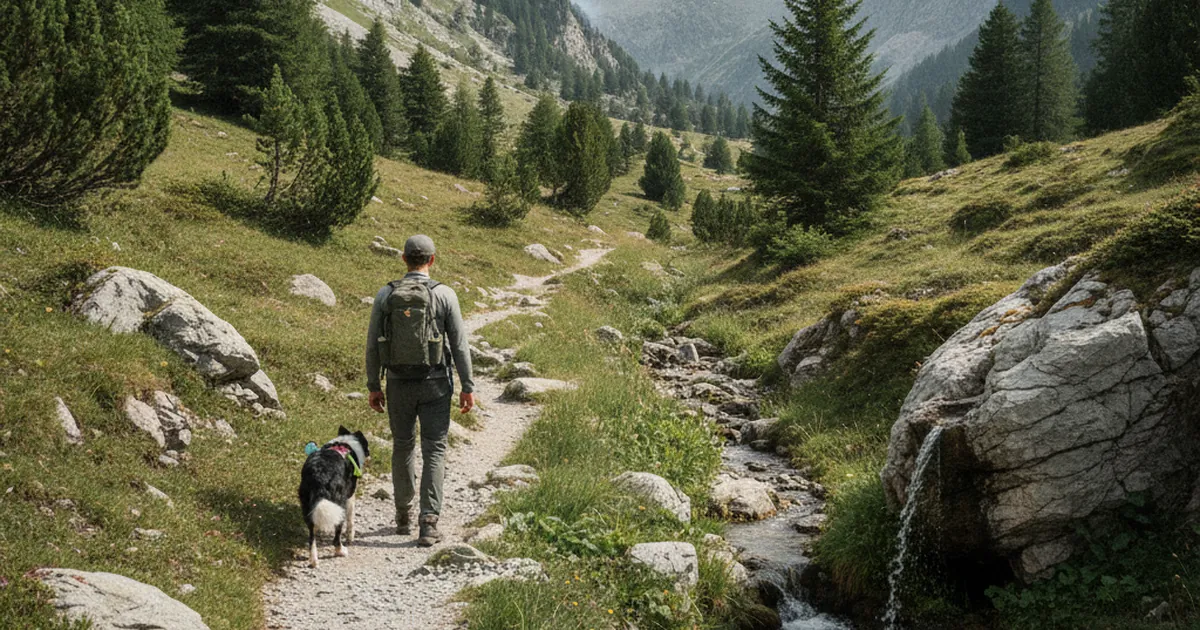
Taking your dog hiking in Haute-Savoie is a great idea. The region has a wide range of trails, from deep forest tracks to high-altitude meadows, and many of them suit four-legged hikers well. That said, a few rules apply, especially in the mountains, and a little preparation makes the difference between a great outing and a stressful one.
Rules to know before you go
In Haute-Savoie, dogs must be kept on a lead in many areas. In protected natural spaces, a lead is mandatory. On alpine pastures, roughly from June through September, your dog must stay on a lead at all times, no matter how well-behaved. Off-lead dogs can stress livestock and trigger defensive responses from patou livestock guardian dogs, which are a common sight on Savoyard pastures. Some nature reserves ban dogs entirely or require them on a short lead. Check the rules for your specific route before you set out.
Heat: the main risk to manage
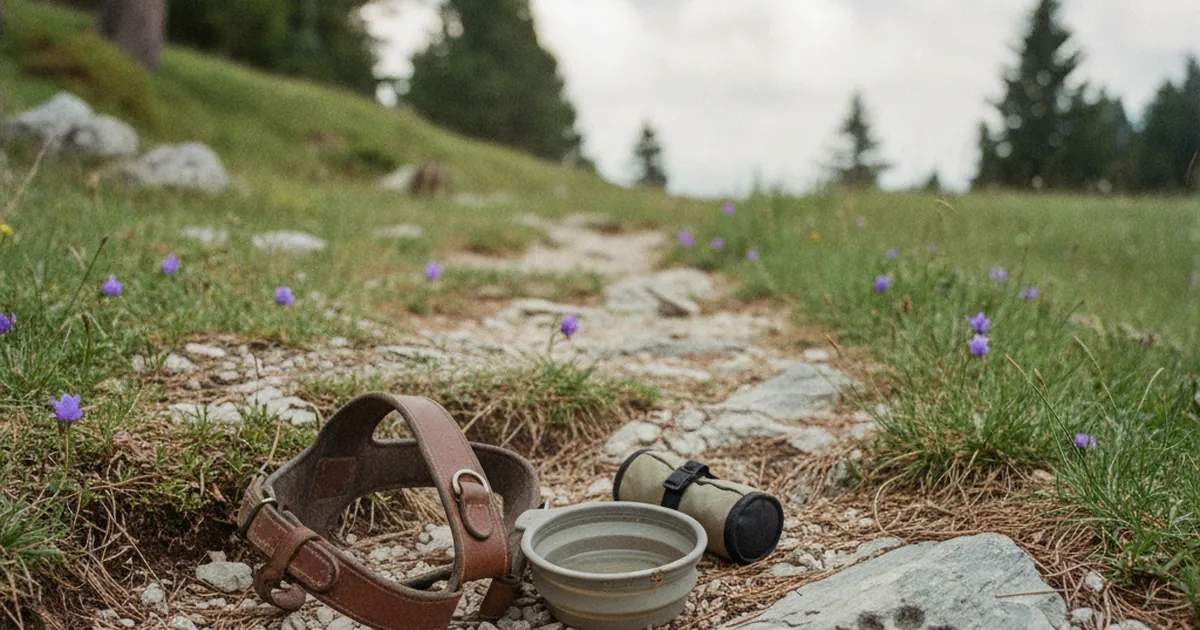
July temperatures in the valleys can top 30 °C. Dogs handle heat much less efficiently than humans: they pant rather than sweat, which cools them down far more slowly. Start early, before 9 in the morning if you can. Bring at least an extra litre of water for your dog, more in hot weather. Offer water regularly, every 30 to 45 minutes. Haute-Savoie has plenty of streams and springs at altitude, but some sections dry up in summer, so carrying a spare water supply is always the safe call. Watch for heat stroke signs: intense continuous panting, thick sticky saliva, unsteady gait. If you spot these, stop in the shade immediately and cool your dog down with water on the belly, paws and neck.
Choosing the right trails for your dog
Not all trails work equally well with a dog. Here is what to look for:
- Forest paths: natural shade, softer ground, less livestock nearby.
- Lower-altitude walks, under 1,500 m in summer, especially during heat waves.
- Short, well-marked circuits that keep your dog away from complex terrain.
- Routes that avoid active pastures, or cross them quickly.
In the Aravis and Bornes area, several lower-altitude forest trails work well for dogs. Around Annecy-Bauges, the walks near Leschaux and Entrevernes are accessible and quieter in high season. The La Figlia hike from Allèves is a rewarding option in that area, well suited to dogs familiar with mountain terrain.
Paws: your dog's weak point
Rocky paths and rough ground can cut or abrade paw pads. After any long outing on hard terrain, check your dog's paws carefully. Cracked or raw pads are easy to spot: limping, persistent licking, refusing to walk on. If you take your dog on tough terrain regularly, dog boots are worth considering and work well on scree. Otherwise, adjust your pace and distance based on how your dog's paws are holding up. A dog limping slightly at the start of a scree field should not be pushed to continue.
Livestock and livestock guardian dogs
This is the most important point when hiking with a dog in Haute-Savoie. Alpine pastures are home to cattle, sheep and goats from May to September. Many herds are protected by patous, large guardian dogs whose job is to defend the flock. When an off-lead dog approaches, a patou will intervene, not out of aggression, but out of instinct. A few simple steps to avoid trouble:
- Put your dog on a lead well before you spot the herd.
- Go around the herd if the route allows it.
- Let the patou see you from a distance, walk calmly, no running, no sudden movements.
- If your dog and a patou do confront each other, never step between them.
Following these steps avoids the vast majority of incidents. Patous are doing their job: respect it and they leave you alone.
Hiking with a dog in Haute-Savoie can be a genuinely enjoyable experience when you go in prepared. The basics: follow local rules, manage heat proactively, pick routes that suit your dog, and keep your lead handy near livestock. Across Haute-Savoie's hiking trails, great days out are there for the taking, on two legs or four.