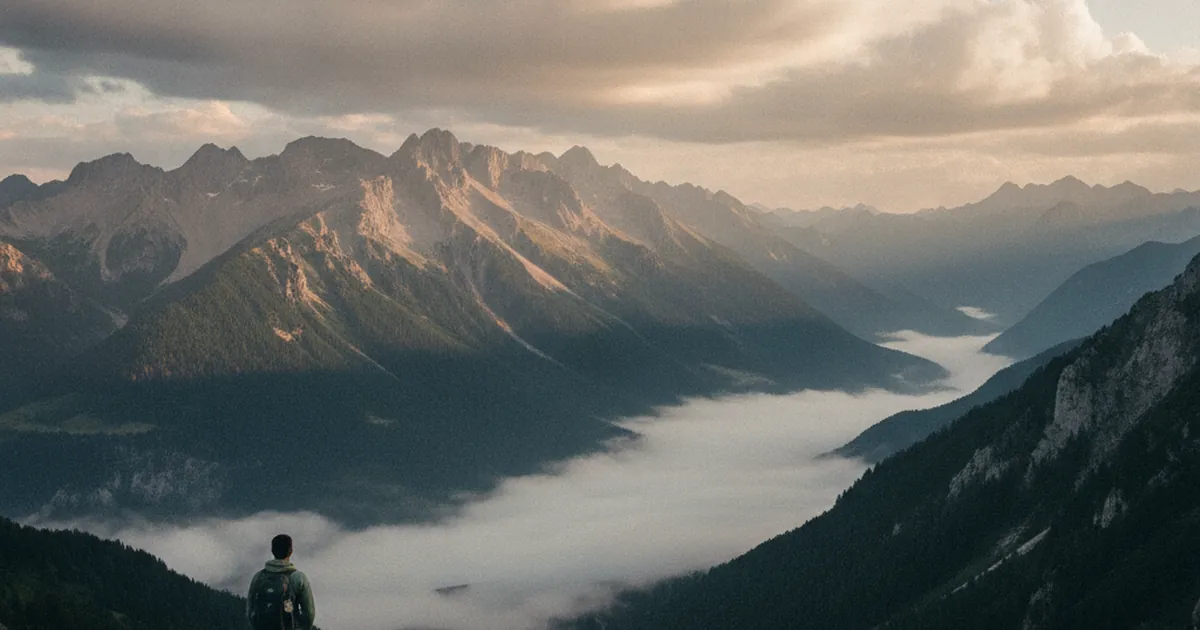
Summer in the mountains promises open ridges and breathtaking views. But it also brings storms. In June, July and August, rainy and stormy spells can last several days in a row. The good news is that you can still hike across Haute-Savoie even during unsettled weather, as long as you shift your entire day earlier.
Why storms strike in the afternoon
Mountain summer storms follow an almost predictable pattern. The sun heats the slopes from early morning, moist air rises, cumulus clouds build up, and the first lightning typically arrives between 1 and 3 pm. This thermally-driven convection is particularly strong in massifs like the Chablais, where the relief amplifies updraughts.
For hikers, this regularity is actually good news. If you know when the risk peaks, you can plan around it.
The sweet spot: start at dawn
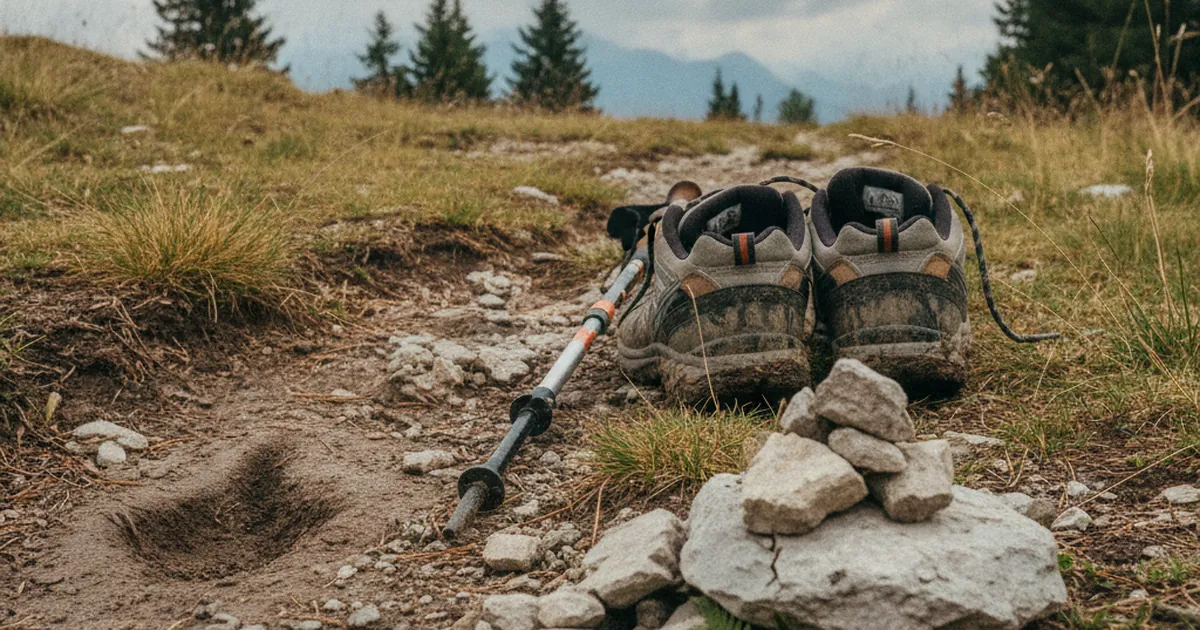
During a stormy stretch, your departure time makes all the difference. The goal is to reach the high point of your hike no later than 10:30 am. To pull that off, you often need to set off by 6 or 7 am.
An early start has real advantages beyond safety. The sky is usually clear, the temperature is cool and the trails are nearly empty. You get the mountain at its best. And crucially, you head down before the clouds start stacking up.
Whether you are departing from Morzine for a high-altitude outing or from Thônes into the Aravis, factor in the drive to the trailhead. It counts in your schedule too.
The 2 pm rule: off exposed terrain before the storm
The simplest rule to remember is this: be off exposed ground by 2 pm. That does not mean back at your car by 2 pm. It means below the ridgeline, sheltered from the open heights.
In practice, that means:
- Leave the summit or ridge by 12:30 pm at the latest.
- Start descending toward the forest or valley as soon as cumulonimbus towers start forming to the west.
- Never linger on an exposed plateau when the sky is closing in fast.
Check the mountain weather forecast the evening before and again in the morning. Météo-France publishes altitude-specific bulletins that include estimated timing for the first instabilities. That bulletin is your reference, far more reliable than a generic weather app.
Adjusting your route to the conditions
When the weather is genuinely unsettled, it is better to choose a lower route than to skip the day entirely. In the Annecy-Bauges area, forest trails and valley-bottom walks offer beautiful outings without any ridge exposure.
For instance, the Grotte de la Cheminée via Morat stays mostly in the trees for a large part of the route, which limits exposure considerably. Similarly, the lakeside trail at Saint-Jorioz is a pleasant and sheltered option for uncertain days.
On ridge or summit routes, keep the 2 pm rule as a hard limit. If you realize at 11 am that you cannot reach the top and get back down before 12:30, turn around. The mountain will still be there tomorrow.
Reading the warning signs
Even when the forecast looks reasonable, the mountains can surprise you. A few signals should prompt you to head down without waiting:
- Cumulus clouds growing rapidly into tall dark towers in under an hour.
- A wind shift or a sudden gust rising from the west.
- Visibility dropping quickly on the surrounding ridges.
- The air cooling sharply for no apparent reason.
These signals matter more than the clock on your wrist. If you see them at 11 am, start descending right away. There is no point waiting for 2 pm to react.
Knowing when to call it
Some days, even a 6 am start is not enough. When the forecast calls for storms by 10 am or an active front is due from the morning, high-altitude hiking is simply not the sensible choice.
On those days, there is no shame in staying low. Explore a village, walk along the lakeshore, or spend the morning planning your next outing from the route guides on this site. Knowing when to stand down is part of mountain culture. Experienced alpinists understand this better than anyone: the right call is sometimes not to go. Your safety has no price, and good days will return.
So the next time the forecast reads "storm risk from the afternoon," do not put your boots away. Set your alarm for 5:30, pack your bag the night before, and head out at first light. You will discover the high pastures in a glow that most hikers never get to see.