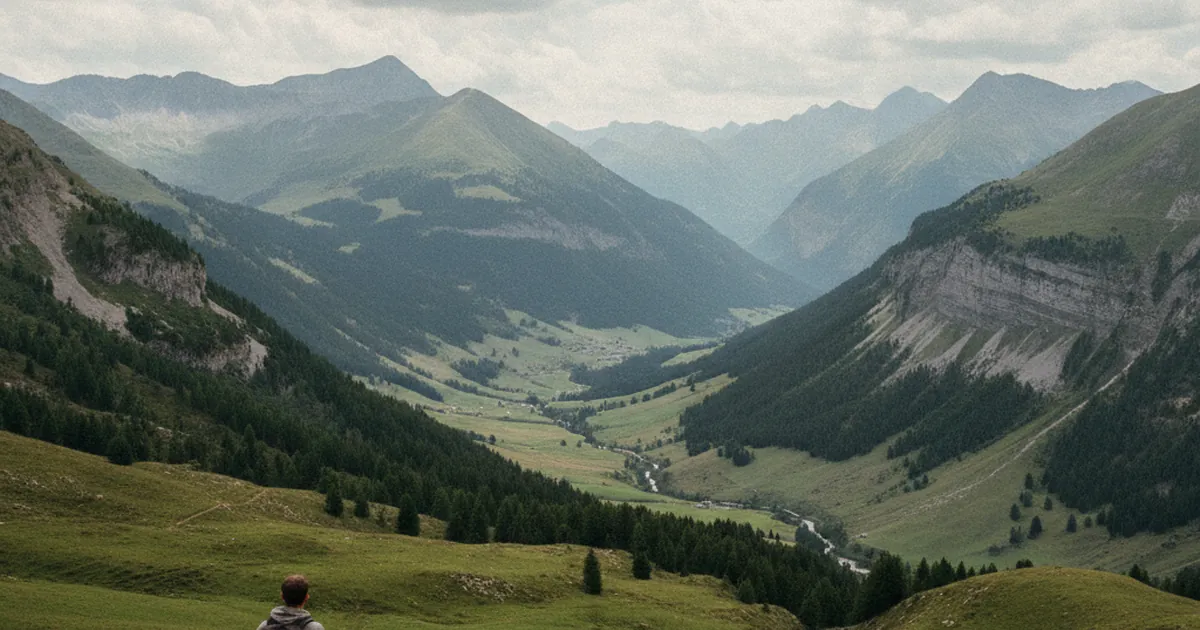
The Reblochon AOP zone covers a very specific part of Haute-Savoie. It follows neither departmental boundaries nor commune limits, but instead traces the contours of mountain massifs, alpine pastures, and cattle breeds that define this territory. If you hike in Haute-Savoie, you inevitably cross this zone without necessarily knowing it: it stretches from the Aravis to the Bauges, taking in a large part of the Mont-Blanc country.
Where the name comes from: livestock and loopholes
The word "reblochon" comes from the Savoyard verb re-blocher, meaning "to re-milk." In the Middle Ages, farmers rented their alpine pastures from landowners who calculated rent based on milk production. Farmers had every incentive to partially milk their cows during the tax collector's visit, then finish the job once he had gone. This "second milking" milk, richer in fat, produced a particularly creamy cheese: the reblochon.
The story may have been embellished over the centuries, but it captures something essential: reblochon was born from peasant know-how, rooted in the daily practices of the alpine farm.
A zone shaped by the massifs
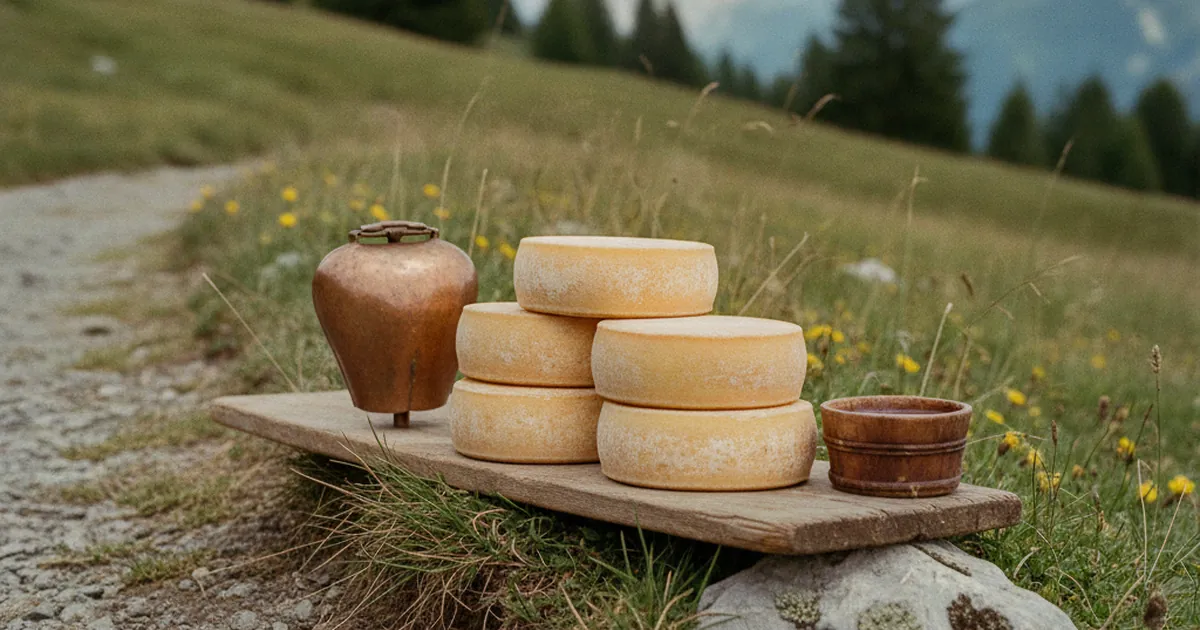
The AOP zone covers almost all of Haute-Savoie, but real production concentrates in the valleys and massifs that combine altitude, natural pasture, and a long dairy tradition. The Aravis range is the historical heartland: Thônes, La Clusaz, Le Grand-Bornand, Manigod. Midway between Annecy and the Swiss border, this area offers ideal conditions: alpine pastures between 1,500 and 2,000 metres, lush grass, and cheese-making traditions centuries old.
The Bauges massif also contributes significantly to AOP production, with less well-known but equally demanding alpine pastures. Thônes remains the reference town for the cheese: it concentrates the fruitières (cooperative dairies), the affineurs, and the markets where reblochon has been sold by the wheel for generations.
Three breeds, one AOP
The Reblochon AOP permits only three cattle breeds to produce the milk: Abondance, Montbéliarde and Tarine (also known as Tarentaise). This is not an arbitrary choice. All three are perfectly adapted to mountain conditions: they graze at altitude without difficulty, withstand harsh winters, and make the most of the grasses and herbs of alpine meadows that give the milk its characteristic aromas.
The Abondance, the quintessential local breed, is the most emblematic. You recognise it by its mahogany and white coat and the distinctive dark ring around its eyes. It also produces milk for another AOP cheese from the same region, the Abondance, which explains why the two production systems overlap in certain valleys.
Fermier or laitier: two families, one AOP
Within the AOP, two types of reblochon coexist. The reblochon fermier is made on the farm, with milk from the farm's own herd, processed immediately after milking. It usually carries a green label. The reblochon laitier, with a red label, is made in a fruitière or dairy using milk collected from several farms.
The difference is real, even if subtle. Fermier reblochon tends to have a more pronounced character, varying from season to season, directly linked to the age of the cheese and the grass the cows have been eating. Laitier is more consistent and more widely available in shops. Both must meet the same specifications on breeds, raw milk, and ageing techniques.
Finding good reblochon on the trail
Hiking in the Aravis or the Bauges often means passing farms that sell direct. Leschaux, in the Bauges, has several farms practising farm-gate sales. The La Figlia depuis Allèves trail crosses Bauges pastures where you sometimes encounter herds of Abondance cattle. On the Aravis side, the ascent of La Tournette from Montmin runs alongside pastures that supply local fruitières.
These are not signposted "cheese trails": they simply reflect the reality of the territory. The cheese is there because the cows are there, and the cows are there because the pastures make it possible.
Conclusion
The geography of reblochon is not an administrative construct. It follows massifs, breeds, alpine practices, and a history spanning several centuries. Understanding these boundaries means grasping why a fermier reblochon bought in Thônes in July is nothing like the cellophane-wrapped version you find in the lowland supermarket. This is a product of territory, in the most concrete sense of the word.