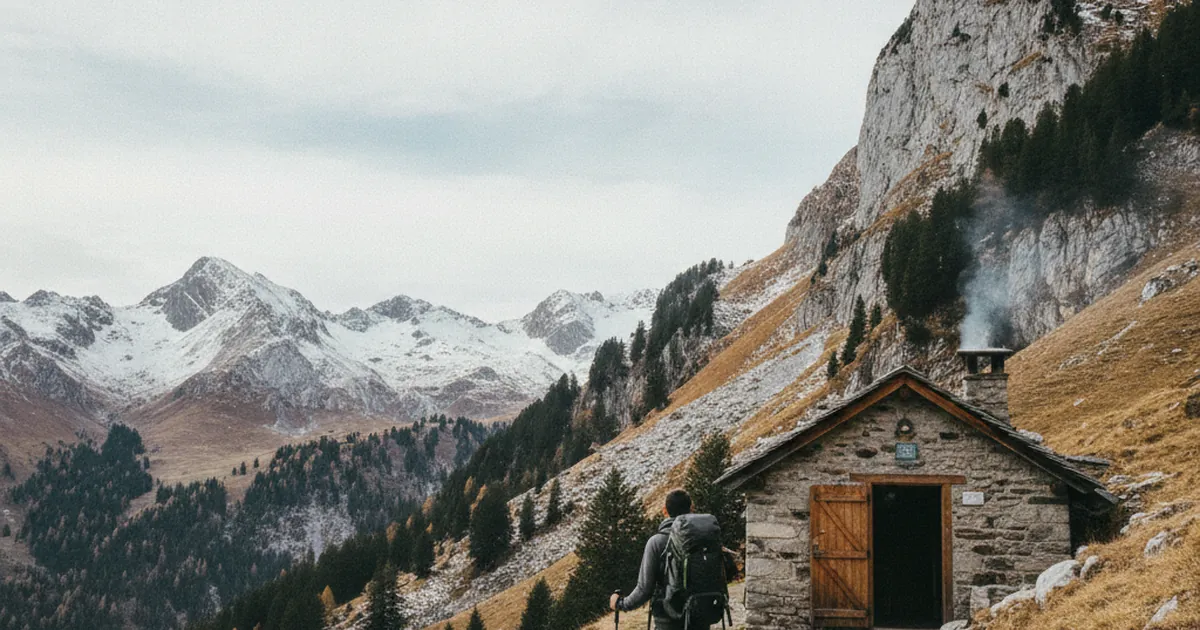
In Haute-Savoie, when the staffed season ends, mountain huts do not all close for good. Many of them remain accessible on a self-service basis until the first snowfalls, then again as spring thaws arrive. These structures let you explore the trails of Haute-Savoie well beyond the peak season, as long as you understand the rules that govern their use.
What is a self-service refuge?
An unguarded refuge, or self-service hut, is a mountain building accessible outside the periods when a warden is present. In practice, the door is unlocked, or a key is available from the local municipality or a hiking association. Inside, you will generally find a shared sleeping area with mattresses or bunks, sometimes an emergency blanket or sleeping bag, a basic heat source (wood stove) and minimal cooking equipment.
These refuges differ from pastoral shelters or emergency bivouacs: they are managed by the French Alpine Club, local councils, or hiking associations, and their use is governed by clear guidelines. Some are free of charge, others ask for a financial contribution, sometimes through a donation box or a remote booking system.
Rules you must follow
Using a self-service refuge relies on a straightforward principle: leave the place in as good a condition as, or better than, how you found it. In concrete terms:
- Put mattresses back in their place after use.
- Wash the dishes and tidy the kitchen area.
- Replace the wood you burned, or chop compensatory wood if split logs are available.
- Take all your rubbish with you. No bins are emptied regularly off-season.
- Do not block bunks with unnecessary gear if other hikers may arrive later.
- Leave a note in the logbook if there is one, with the date, number of people, and the state of the hut when you leave.
These are not mere suggestions: they determine whether free access is maintained for everyone. A refuge left dirty or damaged can result in its permanent closure.
What you will find, and what you won't
Outside the staffed season, refuges operate in fully autonomous mode. You can expect to find:
- Basic shared sleeping spaces (mattresses or simple planks).
- A stove or fireplace, sometimes with a starter supply of wood.
- Basic crockery and cutlery.
- A water source nearby (spring, stream), but rarely certified drinking water: bring a filter or purification tablets.
On the other hand, do not expect:
- Meals or half-board service.
- Electricity outlets or a telephone.
- A warden to give directions or call for help in an emergency.
- Reliable mobile or internet coverage.
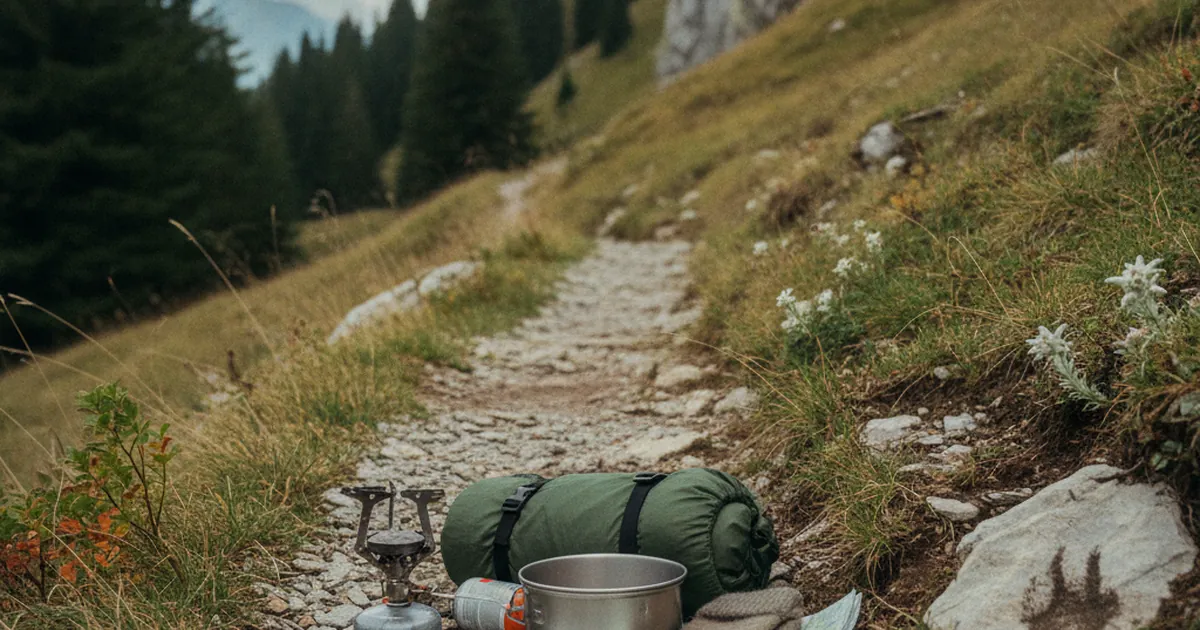
You are fully on your own. Bring your sleeping kit (sleeping bag, insulating mat), your food, water for the first hours, and the means to treat water on site.
Safety and preparation
Using an unguarded refuge off-season requires more careful preparation than during peak season. Access trails can be snow-covered from mid-October onward, daylight hours shorten quickly, and weather conditions are less predictable. Key points to keep in mind:
- Check access conditions the day before with local tourist offices or the refuge managers.
- Download offline maps and note the GPS coordinates of the refuge before setting out.
- Bring an effective insulating mat even if the refuge has bunks: night temperatures can drop very low, even in September.
- Tell someone your route and your expected return time.
In the Aravis and Bornes range, several refuges remain accessible into November, with approach trails that are well-marked even in light winter conditions. The Bauges massif also hosts a few structures of this kind, popular in autumn for the relatively mild temperatures at mid-altitude.
A few examples accessible from Haute-Savoie
One of the most accessible itineraries leading to an unguarded refuge is the ascent to Refuge de la Gôlèse via the old gold mines, in the Chablais area. This refuge remains partly accessible off-season, with a section of the building kept in self-service mode. The approach from Bellevaux is manageable well into autumn, and the trail follows former mining tracks that add a historical dimension to the hike.
Other unguarded refuges can be found in the less-visited parts of the massif: some do not appear in mainstream hiking guides but are listed by the local CAF (French Alpine Club) chapter or by the managing municipalities. A quick phone call to the local town hall is often enough to get up-to-date access information.
Using an unguarded refuge off-season opens up a quieter form of multi-day hiking, when the trails empty out and autumn colours transform the landscape. It is also a shared responsibility: these places exist only because volunteers maintain them and hikers respect them. Every visit is an opportunity to contribute to their preservation, so that the next walkers find the same welcome you did.