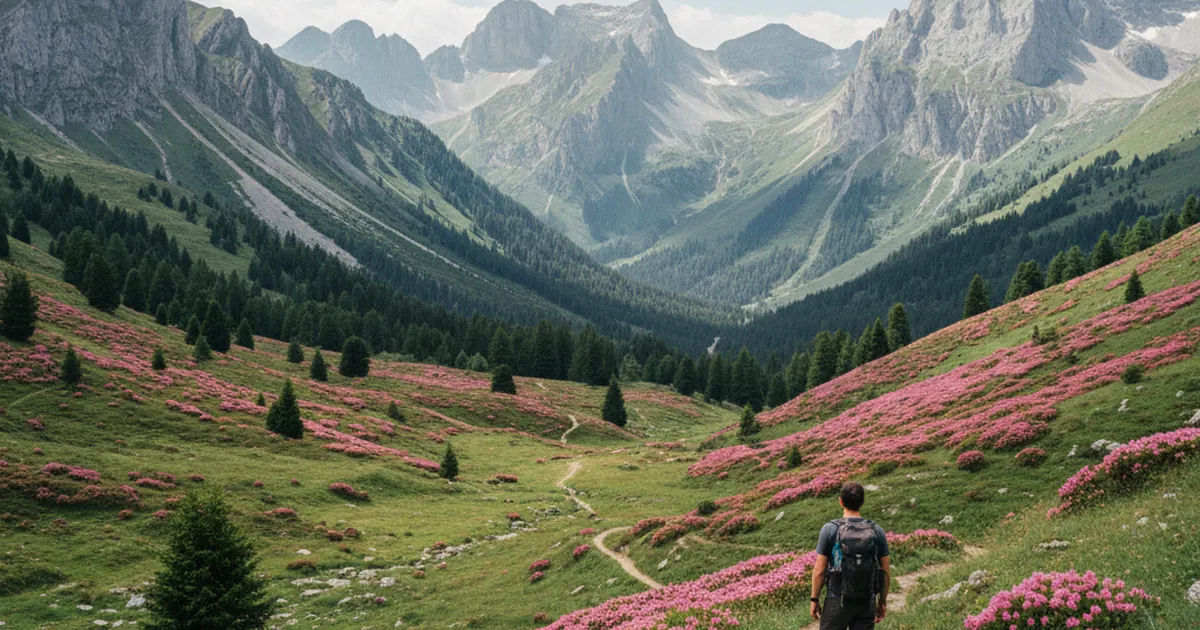
There are moments in the mountains worth the trip on their own. From early June through mid-July depending on altitude, the slopes of the Alps are blanketed in vivid pink. That's the rhododendrons. If you're hiking the heights of Haute-Savoie during this window, you cannot miss them. Here's what you need to know to hit the bloom at its best.
A tough, well-established plant
The rhododendron you'll find on alpine trails is Rhododendron ferrugineum, also called alpenrose. Its leaves have a rusty, scaly underside, which explains both the common name and the Latin one. It belongs to the heather family, a close relative of bilberry and calluna. It grows in dense, often impenetrable thickets on sun-facing slopes between roughly 1,500 and 2,400 metres.
One thing most hikers don't know: rhododendron is calcifuge. It thrives on acidic soils like schist and granite but avoids limestone. That's why some massifs are covered in it while neighbouring hills have almost none. Worth keeping in mind when you pick your route.
When does it bloom?
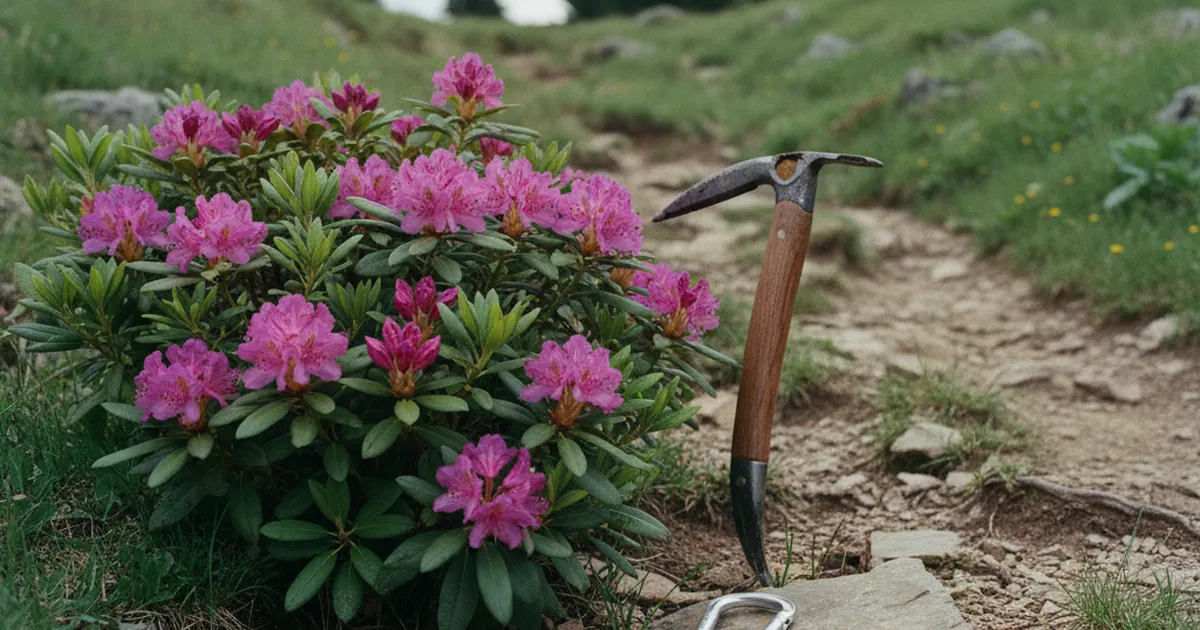
Short answer: somewhere between early June and mid-July. But the real answer depends on altitude and how heavy a winter it was. Around 1,500 metres, the first flowers typically open in the first half of June. At 2,000 metres and above, early July is more realistic, sometimes mid-July if it was a big snow year.
Each site stays in bloom for about two to three weeks. To maximise your chances, start at lower altitudes in early June and work your way higher as the season progresses. The mountain offers a long window of colour if you vary your destinations rather than returning to the same spot each time.
Where to see rhododendrons in Haute-Savoie
The Giffre massif has some of the densest rhododendron cover in the department, particularly on its crystalline slopes. The area around Sixt-Fer-à-Cheval and the trails climbing toward the high refuges pass through spectacular stands of the plant. The Lac de Gers, Refuge de Sales and Tête Pelouse route crosses these zones between roughly 1,800 and 2,300 metres. In July, expect corridors of solid pink on both sides of the trail. This is a long and demanding hike, best suited to experienced walkers in good shape.
At more accessible altitudes above Samoëns and across the mid-mountain terrain of the Chablais, you'll find just as much rhododendron coverage with considerably less effort. Trails winding through alpine meadows between 1,500 and 1,800 metres are often the most colourful and the easiest to reach.
For those after a tougher objective, the Boucle des Hauts-Forts climbs to 2,445 metres from Morzine, passing through several distinct vegetation zones that include heavy rhododendron stands. It's rated very difficult, so plan accordingly.
Respect the ecosystem
Rhododendron is a protected plant in several French regions. Even where it isn't officially listed, picking is a bad idea. These shrubs take years to establish, help stabilise steep slopes and limit erosion. They also provide shelter for mountain wildlife.
Stay on the trail and admire from the path. Rhododendrons often grow right at the edge of rock outcrops or on steep ground. Stepping off the track for a better photo is a genuine slip risk. And however tempting, don't pick the flowers, not even a few stems.
Practical tips for planning your outing
- Track the bloom: local hiking forums and mountain community groups are your best real-time source. Dates shift from year to year depending on snowpack.
- Go early: morning light brings out the pink in ways that afternoon haze cannot match. Early starts are almost always worth it.
- After rain: freshly washed flowers in returning sunshine are often the most vivid you'll see.
- Target altitude: aiming between 1,600 and 2,000 metres covers the majority of blooms, especially from mid-June to early July.
The Giffre valley and the Aravis and Bornes massif both offer ideal conditions for rhododendrons: varied soils, multiple exposures, routes for all levels. Wherever you're based, you'll find a trail that catches the bloom.
Rhododendrons are one of the most accessible natural spectacles the high mountains have to offer. You don't need to summit anything or carry any special gear. You just need to show up at the right altitude at the right time. If you're planning your hikes in Haute-Savoie this summer, build at least one outing around the bloom. It's the kind of thing that makes you lace your boots up again next year.