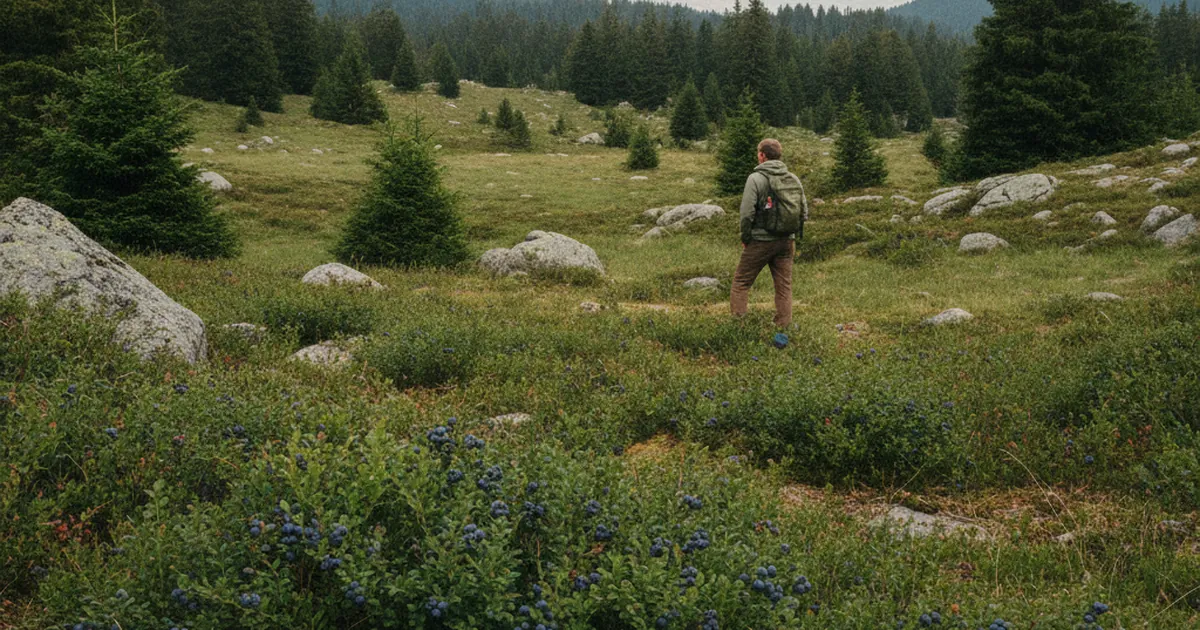
Every August, wild blueberries turn the forest floors and alpine meadows of Haute-Savoie a deep, inviting blue. Picking them looks straightforward, but there's a short window, a few rules to follow, and the terrain rewards a little preparation. Here's what you need to know before heading out.
When does the blueberry season start?
Wild blueberry (Vaccinium myrtillus) timing depends almost entirely on altitude. Below 1,000 metres, the first ripe berries appear in late July. Between 1,200 and 1,800 metres, the peak is usually August. Higher up, you can still find good picking into early September if the weather has been cooperative.
A couple of patterns to watch: a warm June speeds up ripening, rainy spells in July plump the berries up. Dry summers produce smaller but more intensely flavoured fruit. If the blueberry bushes around you are starting to turn red and gold, the season is winding down.
Where to find them in Haute-Savoie
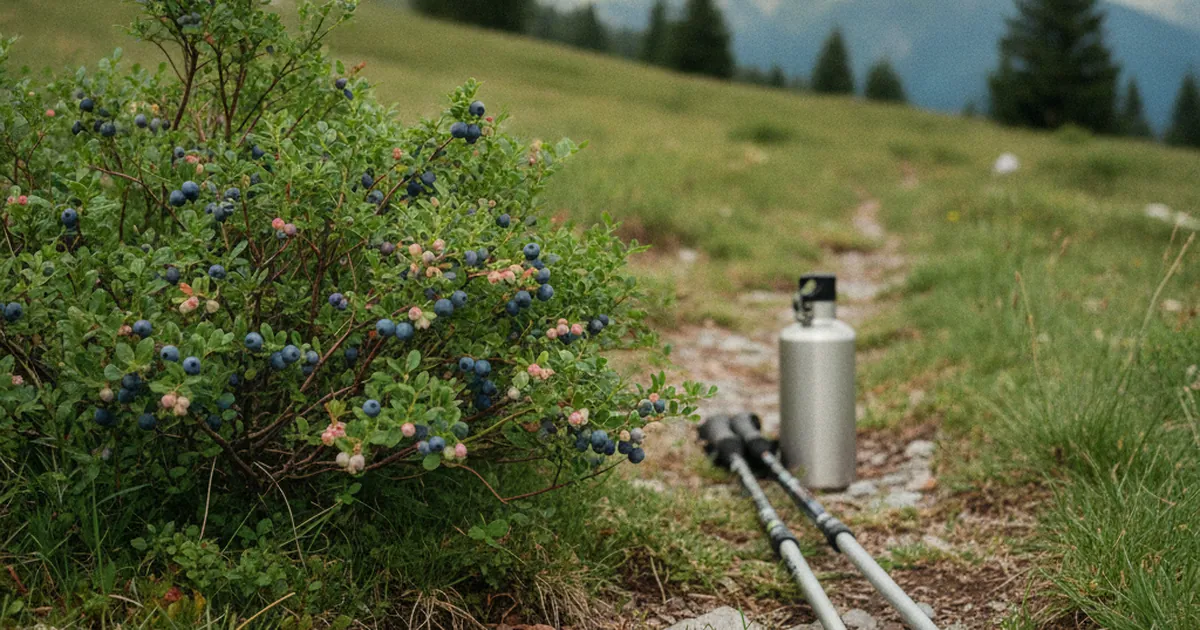
Wild blueberries thrive at the edges of conifer forests, in sunny clearings, and on south-facing slopes, roughly between 800 and 1,800 metres. They prefer acidic, slightly damp soils, which is why they're abundant in the crystalline mountain massifs.
The Bauges massif is one of the most reliable areas, particularly around Allèves and Entrevernes. The beech and fir forests of the Annecy-Bauges region are laced with blueberry patches. If you want to combine hiking and picking, both the La Figlia hike from Allèves and the Entrevernes mountain loop pass through rich berry terrain.
Across Haute-Savoie's trails more broadly, the trick is simple: get off the main tracks and gain a little altitude. The most accessible spots are usually picked clean.
How much can you pick? The rules
This is where most people get confused. In France, gathering for personal use is generally tolerated on unfenced public land, but the specifics depend on local regulations.
- On private land, you need the landowner's permission. No fence does not mean open access.
- In state forests, personal picking is usually allowed within limits set by the ONF (French forestry authority), typically a few litres per person per day depending on the area.
- Some municipalities have issued local orders restricting quantities, especially in tourist-heavy areas. Check with the local town hall if you're heading somewhere new.
- Selling berries without a commercial authorisation is illegal.
The common-sense rule: pick for yourself and your household, not to stock a market stall. A reasonable quantity raises no issues.
How to pick without damaging the bushes
Blueberry plants take years to recover from heavy-handed picking. A few simple habits mean you can come back to the same spot next summer:
- Pick by hand, berry by berry or by running your fingers gently along the stems. Metal combs are often banned as they strip leaves and damage new growth.
- Watch where you walk. Blueberry plants cover the ground between rocks and roots, and broken stems don't regrow quickly.
- Never pull up a plant.
- Leave some berries on each bush, both for natural reproduction and for the birds and small mammals that depend on them in late summer.
Planning your outing
Go early in the morning: the dew makes berries easier to pull off, and you beat the crowd. Bring a rigid container rather than a bag (blueberries crush easily). A small basket or a sealed box is enough for a sensible haul.
Dress for the undergrowth: ticks are active even at altitude in August. Cover your ankles and check yourself when you get back. Dense vegetation also hides wasp nests later in the season.
If you're combining a hike with picking, build in extra time. You stop, you taste, you move on, you stop again. That's part of the outing.
Back home, fresh blueberries keep for 24 to 48 hours in the fridge or can be frozen straight away. For jam, the classic ratio is around 750 g of sugar per kilo of fruit. Tart, clafoutis, yoghurt: the recipes are endless.
Blueberry season is short, and the good spots fill up fast once word gets out. Scout your area in advance, check local rules, and go on a weekday morning rather than a Saturday. You'll pick more, in peace.