Mobile coverage can vanish, batteries die without warning, and a few seconds can tip a critical situation either way. Knowing the universal distress signals is part of being prepared before heading out on mountain trails in the Alps. These simple codes require no sophisticated equipment and may one day save a life.
The Y-signal: the universal distress position
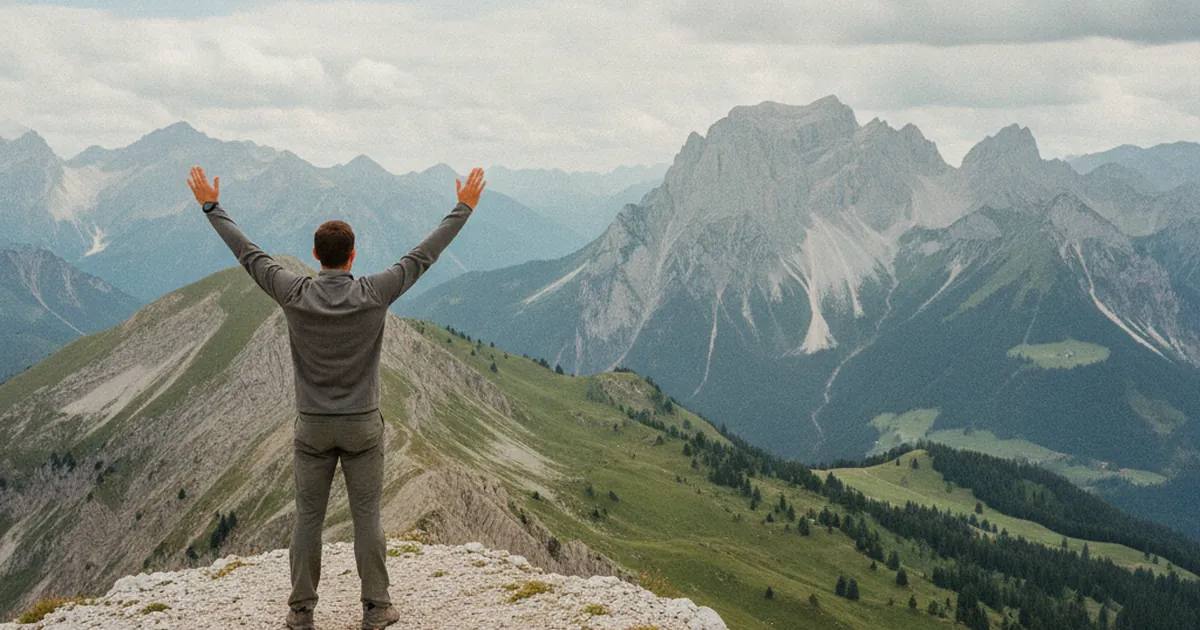
Both arms raised diagonally to form a clear Y shape: this is the internationally recognised distress signal for aerial rescue teams. If you are injured or stranded and a helicopter flies over your position, hold this pose and maintain it for as long as possible. It clearly means: "I need help." Conversely, one arm raised, or both arms angled downward in an open V, signals "all clear, no assistance needed."
This convention is shared across mountaineering, hiking, and civil aviation. It requires no special equipment: just your body and enough open ground to be seen from the air or from a nearby ridge. In practice, move to a clearing, a raised rock, or a flat open area rather than staying under tree cover.
The whistle code: six blasts per minute

A whistle is one of the most effective and lightweight signalling tools available. The international protocol is straightforward: six regular blasts within one minute, followed by a one-minute pause, repeated until you receive a response. Rescuers reply with three blasts to confirm your signal has been located.
In dense forest or the bottom of a gully, a whistle carries far better than a human voice, which tires quickly and disperses. Choose a pealess model (with no ball inside): it works when wet and in freezing temperatures, where a ball-type whistle may seize up. It weighs a few grams at most. Slip one into your pocket before every outing, whether a relaxed walk or an engaging climb in the Aravis and Bornes range.
The signalling mirror
Little known outside specialist circles, a reflective mirror (heliograph) is remarkably effective in clear weather. By directing the sun's reflection toward an aircraft or an elevated vantage point, you can produce a flash visible for dozens of kilometres. Purpose-built mountain mirrors include a sighting aperture to help aim the beam accurately.
In practice, a small cosmetic mirror or even the dark screen of your phone can serve as a backup if you have nothing else. The signal is less precise, but in open terrain like the high meadows of the Bauges massif, a well-aimed reflection can catch the eye of a pilot or a ground team. Use is limited to sunny days, but in the Haute-Savoie Alps during summer, that is often the case.
Fire, smoke, and artificial light
Three fires arranged in an equilateral triangle form the classic distress signal recognised under international conventions. Smoke is valuable during daylight: green grass or synthetic materials produce dark smoke that is visible from a great distance. A bright flame works better at night, standing out against the dark sky.
Without fire, a headlamp can fill the same role. The SOS Morse signal (three short flashes, three long, three short, pause, then repeat) is universally understood by mountain rescue teams. Some modern headlamps include an automatic SOS mode accessible in just a few seconds. On demanding routes like La Tournette from Montmin, a working headlamp is essential kit regardless.
Your phone and 112
When a signal is available, 112 is always the first step. This European emergency number works without an active subscription, sometimes even without a SIM card, and can connect via operators other than your own. In isolated Alpine valleys, it can sometimes reach a cross-border signal from Switzerland or Italy, which may make all the difference.
Before setting off, a few simple habits significantly reduce the risk: leave your planned route and estimated return time with someone you trust, check the forecast, and pack a spare battery. On quieter, more isolated trails like La Figlia from Allèves in the Bauges, thorough preparation matters more than on a well-signposted valley circuit.
Final thoughts
Universal distress signals are not learned in the heat of a crisis: they are memorised calmly, before every mountain departure. Arms in a Y, six whistle blasts, a mirror aimed at the sun, fire in a triangle: four simple codes, light to carry and potentially decisive. Whether you explore the mountains of the Alps alone or with others, taking a few minutes to review these conventions before the season starts is a habit worth far more than any latest-generation gadget.