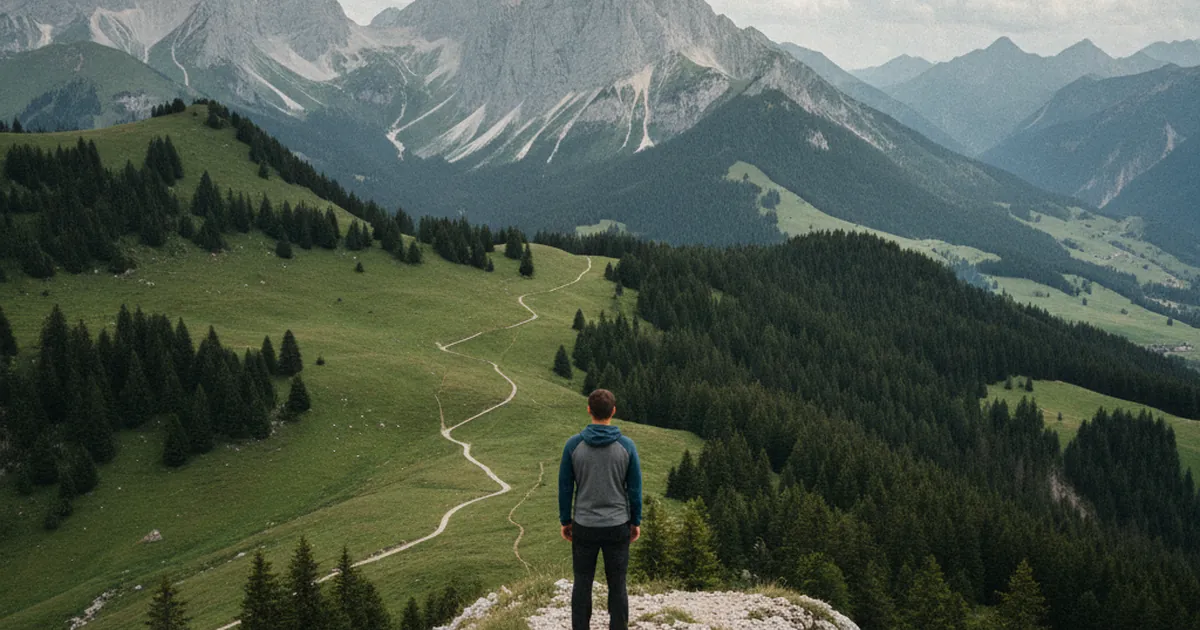
You're hiking in Haute-Savoie and everything is going smoothly, until it isn't. A twisted ankle on a scree slope, a companion who loses consciousness, a fall on hard snow. In those moments, knowing exactly what to do and who to call can make all the difference. You don't have to be in the middle of a crisis to learn the procedure: this is knowledge you build in advance, at home, not at 2,000 metres with an injured person beside you.
112: the universal emergency number
In France, the emergency number to use in the mountains is 112. It works from a mobile phone even without your own carrier's signal, as long as another carrier has coverage in the area. It works without a SIM card and is always free. Numbers 15 (SAMU emergency medical services), 17 (police), and 18 (fire department) also work, but 112 centralises the call and routes it automatically to the right service based on your location.
One key point: 112 can geolocate your call under certain conditions. In France, the AML (Advanced Mobile Location) protocol automatically transmits your GPS coordinates to the dispatch centre if your smartphone supports it. Most modern Android and iOS devices do. That said, never rely on this as your only location method: always communicate your position verbally as well.
PGHM and CRS Montagne: who responds?
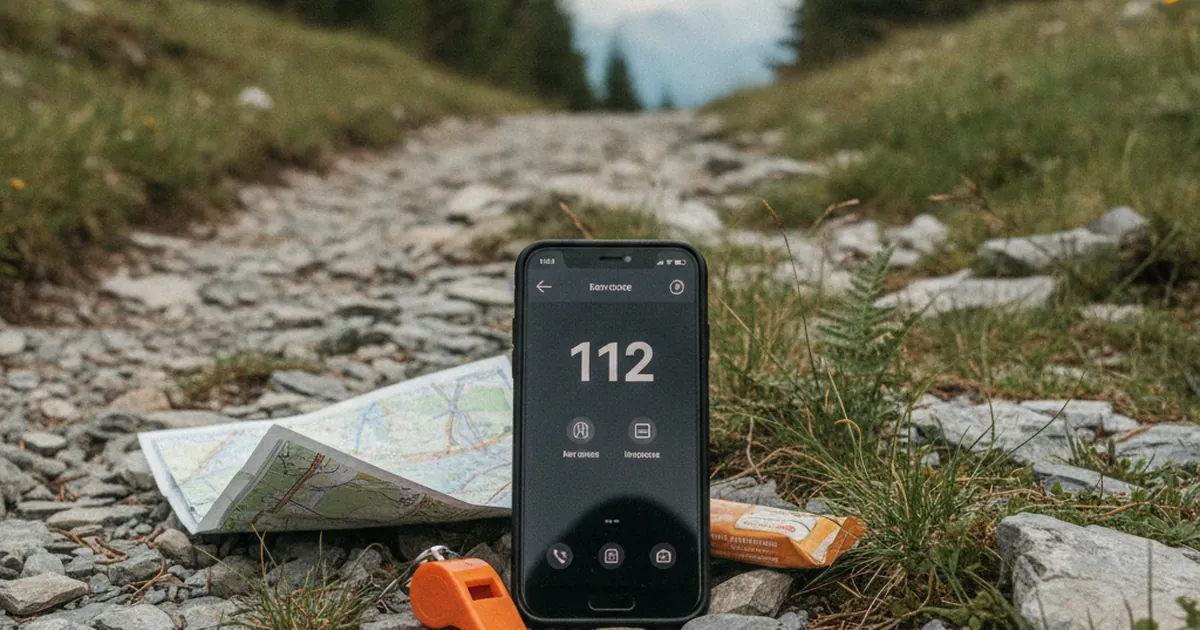
Two specialised services handle mountain rescue in Haute-Savoie.
The PGHM (Mountain Gendarmerie Unit) is based in Chamonix and operates across the entire department. It handles helicopter winching, high-altitude evacuations, and missing-person searches. Its members are both gendarmes and qualified mountain guides or specialised rescuers. This is the lead unit for high-altitude and glacial terrain.
The CRS Montagne (Mountain Police Unit) is also active in the department, typically in lower and mid-mountain zones, working alongside or independently of the PGHM depending on the area. In practice, when you call 112, the dispatch centre routes the call to whichever team is best placed for your location.
What to say when you call
Every second matters. Before dialling, pull together the following information and give it in this order:
- Your name and a callback number (the rescuer can call back if the line drops)
- The nature of the incident: fall, medical episode, hypothermia, missing person
- How many people are involved and their condition: conscious, unconscious, injured
- Your exact location (see the next section)
- Weather conditions on site: wind, visibility, snow, storm
- What you are able to do while waiting for rescue to arrive
Don't hang up first. Stay on the line until the dispatcher confirms they have everything they need. If the call drops, redial immediately.
Giving your exact position
This is often the hardest part, especially if you are off-trail or in an unfamiliar area. Here are the most reliable methods.
GPS coordinates. Most navigation apps (Maps, Komoot, Iphigénie) display your position in latitude/longitude format. Note them down before calling or read them out directly to the dispatcher.
Trail signposts. Many trailheads and junctions in Haute-Savoie carry a name and sometimes a post code. If you can see one, mention it: these codes are in the rescue services' databases.
Geographic landmarks. Name the nearest summit or pass, the valley below, the visible stream. Include the slope direction: north, south, east, west. Altitude is also very useful for rescuers who know the terrain.
On marked trails in the Vallée du Giffre or the Chablais area, signposts often carry the location name. Use them if one is visible nearby.
Two habits to build before every hike
Tell someone your itinerary and expected return time. If you are not back when expected, that person can alert the rescue services without you having to be the one to call. It is free, takes thirty seconds, and can be decisive.
Check signal coverage along your route. On remote trails like the Bout du Monde trail near Sixt, or on high-altitude traverses, you can go several kilometres without any signal. For serious outings in these areas, a personal locator beacon (PLB) or satellite communicator is worth considering.
Memorise 112, prep your GPS coordinates before heading out, and make sure someone knows where you are going. Exploring the trails of Haute-Savoie, among the finest in the Alps, always starts with being prepared before you close the door behind you.