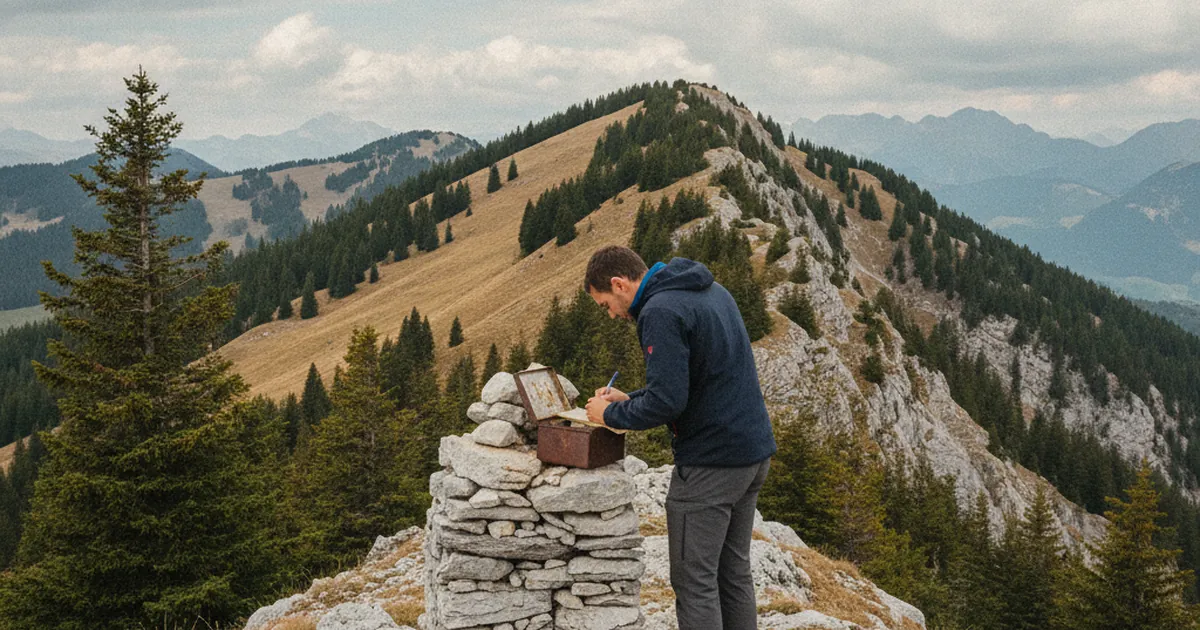
At the end of a climb, on the highest rock or at the base of a cross, you sometimes find a small metal box. Inside: a notebook, a pencil, often damp, always precious. This is the summit book. A quiet tradition that has existed for more than a century in the Alps, and one that hikers across the Savoyard mountains continue without always knowing its origins.
A tradition born with alpinism
Summit books appeared alongside modern alpinism in the nineteenth century. Early climbers had no way to prove they had reached the top. Leaving a notebook with their signature became a form of proof, a way to document the achievement for their club. The practice spread gradually across the Alpine arc, carried by the newly formed mountaineering clubs.
In France, the Club Alpin Français, founded in 1874, played a role in establishing this tradition. Some local sections still place books on summits within their territory today, replace them when full, and preserve the old volumes. These archives form a unique memory of regional mountaineering history.
What you find in the box
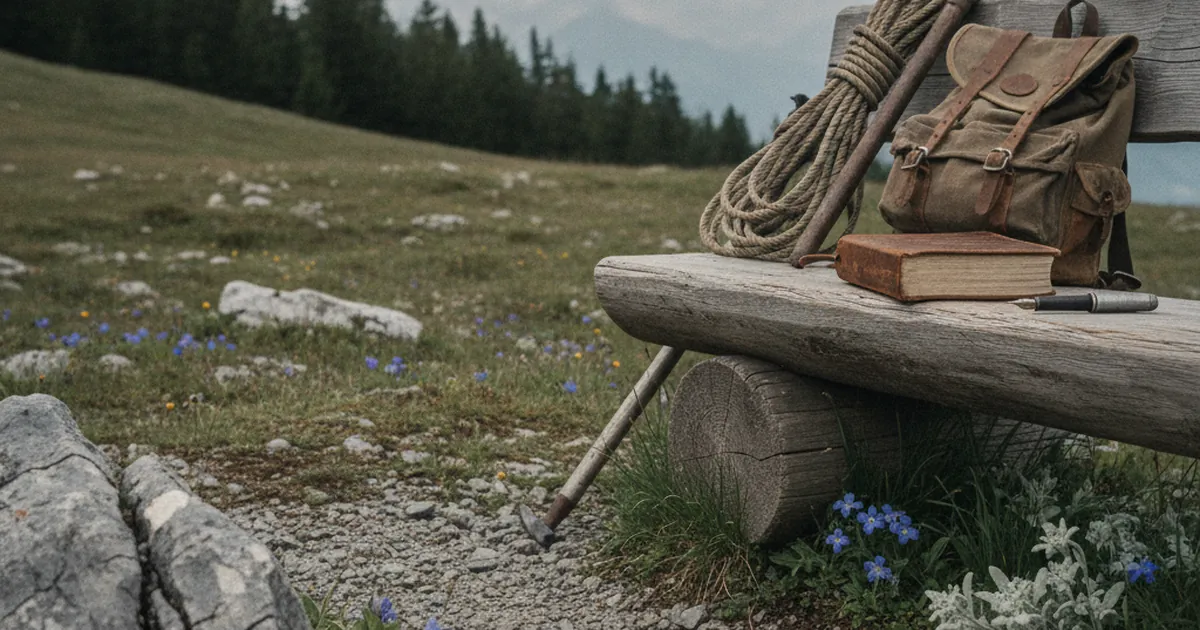
The box varies by summit and era. A recycled tin can, a sealed plastic container, an aluminium box painted red with a club's logo: the forms are many. The key is waterproofing. At high altitude, frost, rain, and wind quickly damage paper. Inside, you typically find a bound or spiral notebook, sometimes slipped into a plastic bag for extra protection, with a pencil attached since ballpoint pens stop working in the cold.
The books are often found at the base of summit crosses: the cross serves as a visible landmark, and the box nestles naturally among the nearby rocks.
Why hikers sign
It is worth asking. You are at the summit, the view is there, your legs are tired, and yet you take the time to pull out a pencil and write your name with the date. There is first a sense of community: signing means joining the list of people who took the same path. You look at the previous signatures, see names in foreign languages, and understand that this summit draws people from everywhere.
There is also a memorial dimension. Leaving your mark in a summit book means existing a little in the history of that mountain. People will read this name in ten years, in twenty. Some old books hold the signatures of people no longer alive, and leafing through them produces a strange and moving feeling. Finally, there is a practical side: in the event of an accident, a summit book can help rescuers confirm that someone reached a specific point at a given time.
Books that tell the history of a summit
The oldest books are genuine archives. You can read the weather conditions for a given day, noted in two words by someone who was cold. You find messages left for friends who were supposed to follow the next day. Sketches drawn in haste. Declarations of love. Messages in memory of someone.
Sometimes a book stops abruptly and the next one starts years later. The box was buried under snow, or nobody came for a long period. These gaps are part of the history too. Some mountaineering clubs are digitising their old volumes to preserve these archives against the irreversible deterioration of paper.
In Haute-Savoie: look for the box
In the Savoyard Alps, summit books are found mostly on peaks and cols that require a real effort, not on family viewpoints. If you are planning a route to the Pointe de Nantaux, keep your eyes open at the top: a box often hides among the rocks or at the base of a cross. The same applies to heights across the Pays du Mont-Blanc area or in the valleys of the Arve valley, where alpinism has a long and documented history.
If you find a book, take a moment to leaf through it before signing. Look for the oldest date, find an entry that catches your eye. It is a read like no other: brief, personal, fleeting, and yet preserved.
Some summits have no book at all. Either nobody has placed one, or the box has disappeared. A small waterproof box and a water-resistant notebook are all it takes to start the tradition. Others have books in poor condition: if you arrive with supplies, leaving a new notebook is a gesture that the next hikers will appreciate. Summit books exist because people decided they should. Just a notebook in a box, and people finding each other there, summit after summit.