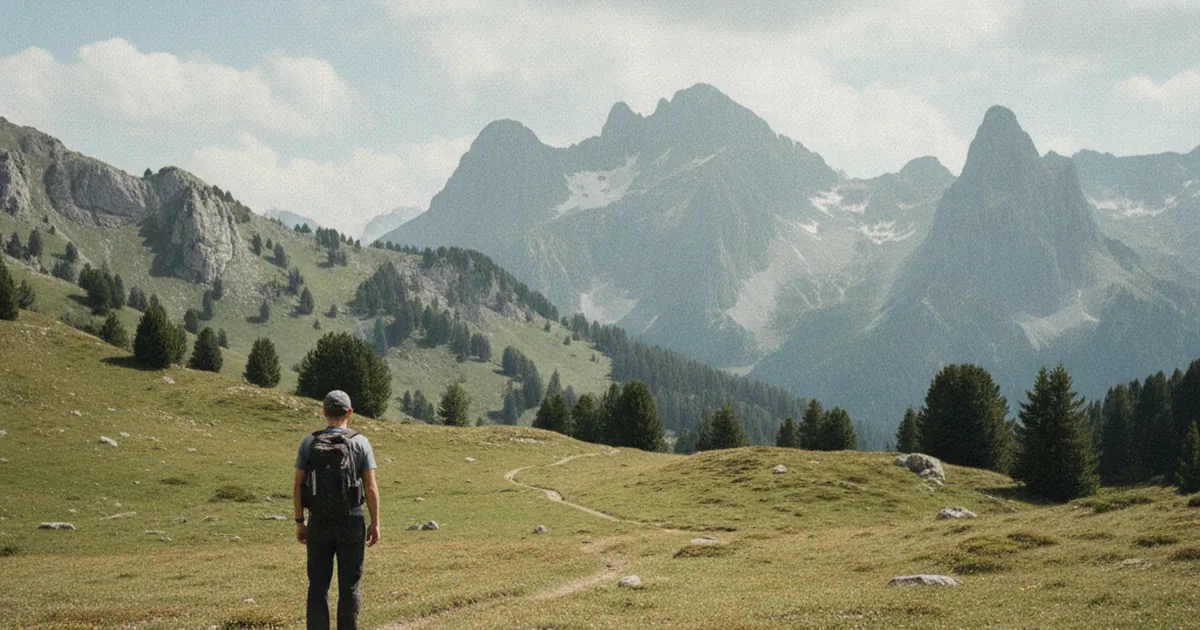
At 2,000 metres, you receive around 20 to 25 percent more UV radiation than at sea level. At 3,000 metres, that figure exceeds 30 percent. Skin burns faster than you realise, because cool breezes and lower temperatures create a false sense of comfort. This is precisely the trap that sends so many hikers home with a serious sunburn after an otherwise perfect day in the mountains.
Why altitude changes everything
The atmosphere filters out a portion of UV rays before they reach the ground. The higher you go, the thinner that protective layer becomes: UV intensity increases by roughly four percent for every 300 metres of elevation gain. In July, along the ridges of the Aravis and Bornes massifs, the UV index can reach 8 to 10, placing it in the "very high" to "extreme" category defined by the WHO.
Reflection compounds the problem. Snow bounces back up to 80 percent of UV rays; pale rock reflects between 10 and 25 percent. On a high-altitude lake or open rocky plateau, you are exposed from above and below simultaneously. Frequently neglected areas, such as the ears and the back of the neck, take a particularly heavy hit.
Reading the UV index before you set off
Météo-France publishes a daily UV index forecast map each morning. In summer in Haute-Savoie, mountain summits and high-altitude lakes regularly sit at index 8 or 9 from July onwards. Here is how to read the scale:
- 0 to 2: low, no specific precautions needed
- 3 to 5: moderate, protection recommended for prolonged exposure
- 6 to 7: high, protection required for any outdoor activity
- 8 to 10: very high, reduce exposure between 11 a.m. and 3 p.m.
- 11 and above: extreme, stay in shade during the central hours of the day
In practice, heading to a high-altitude lake such as Lac de Gers or the Sales refuge on a July day with a UV index of 8 means leaving early, applying sunscreen before you reach the trailhead, and reapplying every two hours.
Using sunscreen properly on a mountain hike
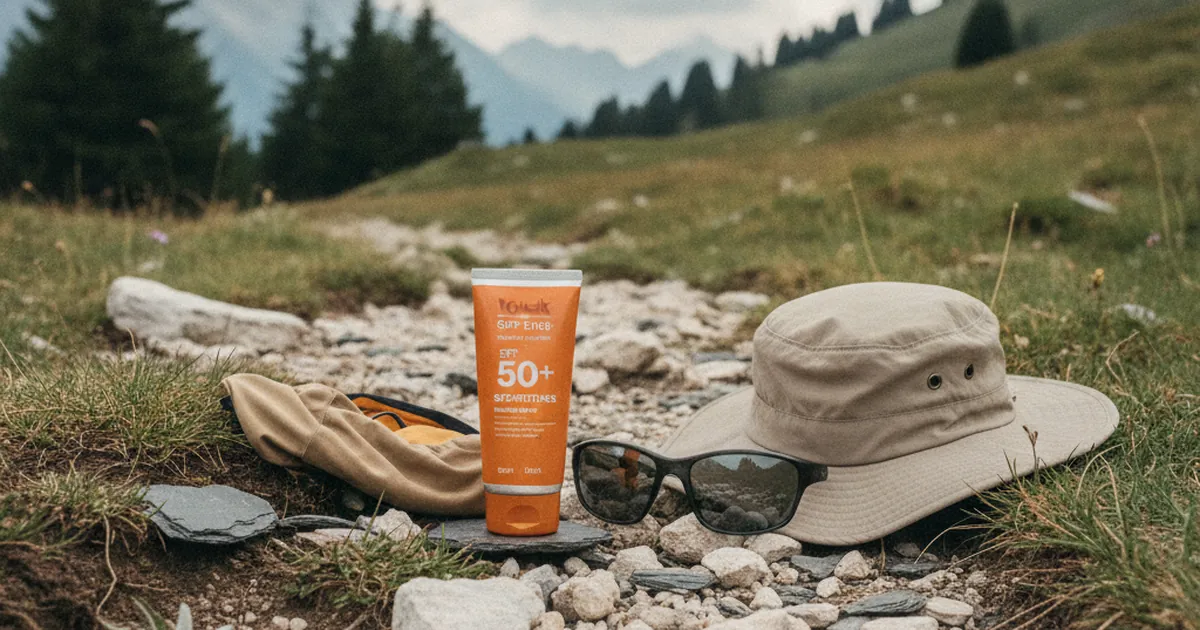
SPF 50+ is the minimum for hiking at altitude. The difference from SPF 30 matters most when the cream wears off through sweat or wiping: on a long summer outing, the higher factor provides a safety margin SPF 30 simply does not. Apply before leaving home, not in the car park: sunscreen needs 15 to 20 minutes to bind to the skin. Reapply every two hours, and always after swimming or heavy sweating.
The most commonly forgotten spots:
- The ears, especially under a hat with open sides
- The back of the neck, particularly exposed on ridge traverses
- The backs of the hands, in direct sunlight even when holding trekking poles
- The lips: use an SPF 50 lip balm and reapply after every sip of water
- The chest if you wear a V-neck or sleeveless top
Clothing as your first line of defence
Clothing is more reliable than sunscreen because it does not sweat off. A fabric rated UPF 40 or above blocks the vast majority of UV rays. A lightweight long-sleeved shirt with a collar shields your shoulders and arms without causing overheating in breathable fabric. A neck gaiter protects the back of the neck without the fuss of reaching around with sunscreen.
For the head: a wide-brim hat (at least 7 cm all round) is more effective than a cap, which leaves the ears and neck exposed. For the eyes: category 3 sunglasses at a minimum, category 4 for glaciers and snowfields. Cataracts are a real long-term consequence of repeated unprotected UV exposure, not a risk worth ignoring on regular outings.
Timing your hike around the UV peak
UV intensity peaks between 11 a.m. and 3 p.m. A hike that puts you on an exposed pass at 1 p.m. combines the most dangerous window of the day with your maximum elevation. Setting off at 6 or 7 in the morning lets you cover most of the elevation gain before the UV peak, while enjoying cooler temperatures.
On a hike in the Bauges massif heading to La Tournette from Montmin, a 7 a.m. start gets you past the summit before 11 a.m., with the descent through forested slopes in partial shade during the warmest part of the day. If your route is long, build in a real rest in the shade between 11 a.m. and 1 p.m.: that is not wasted time, it is smart load management.
What to remember
Protecting your skin at altitude comes down to a simple equation: SPF 50+, wide-brim hat, lightweight long sleeves, an early start, and a break in the shade during the hottest hours. Out on the trails of Haute-Savoie, summer conditions can catch even experienced hikers off guard. Looking after your skin is part of preparing for a hike, right alongside checking the forecast and packing enough water.