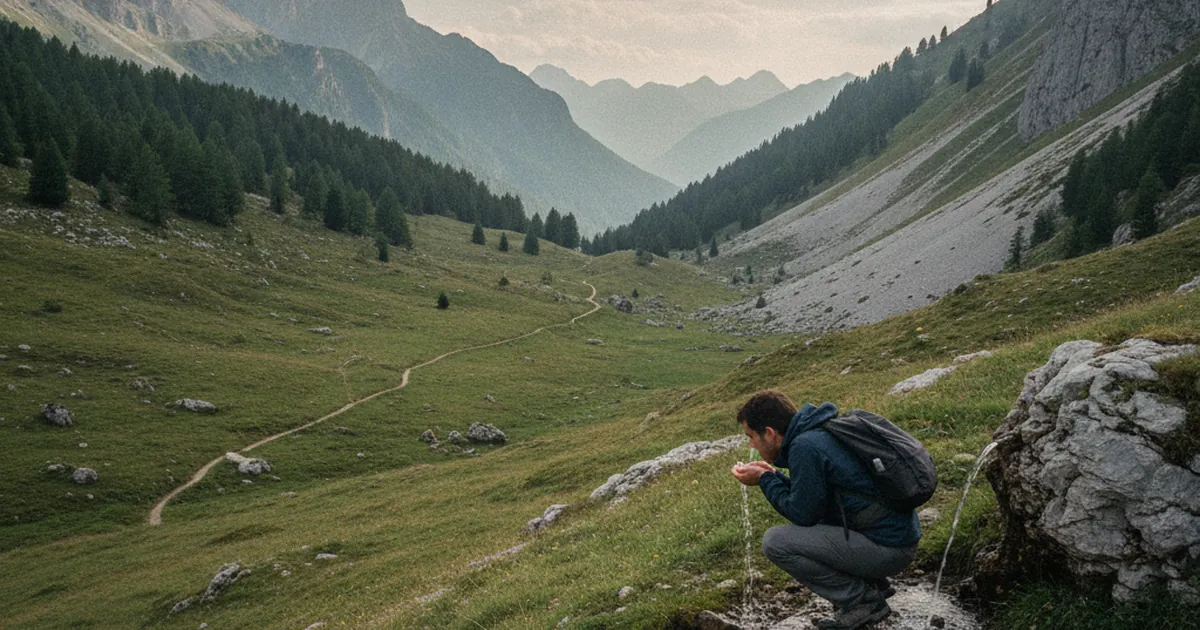
You've been walking for two hours, your bottle is nearly empty, and a clear trickle of water emerges from between two rocks. The impulse is natural: kneel down and drink. But on the trails of Haute-Savoie, a visually pure spring tells you nothing about whether it's safe to drink. Here's how to assess the situation before deciding.
The myth: mountain water equals pure water
Water flowing off an alpine meadow always looks crystal clear and cold. But its quality depends entirely on what's happening upstream, often invisible from where you're standing. Herds of cattle, flocks of sheep, or marmot colonies can contaminate a stream or spring well before the water reaches you.
The most common culprit is Giardia lamblia, a protozoan that resists chlorine and is invisible to the naked eye. Once ingested, it causes giardiasis: cramps, diarrhea, and dehydration. A very real risk, even in midsummer, even at 2,000 meters.
Risk factors to check on the ground
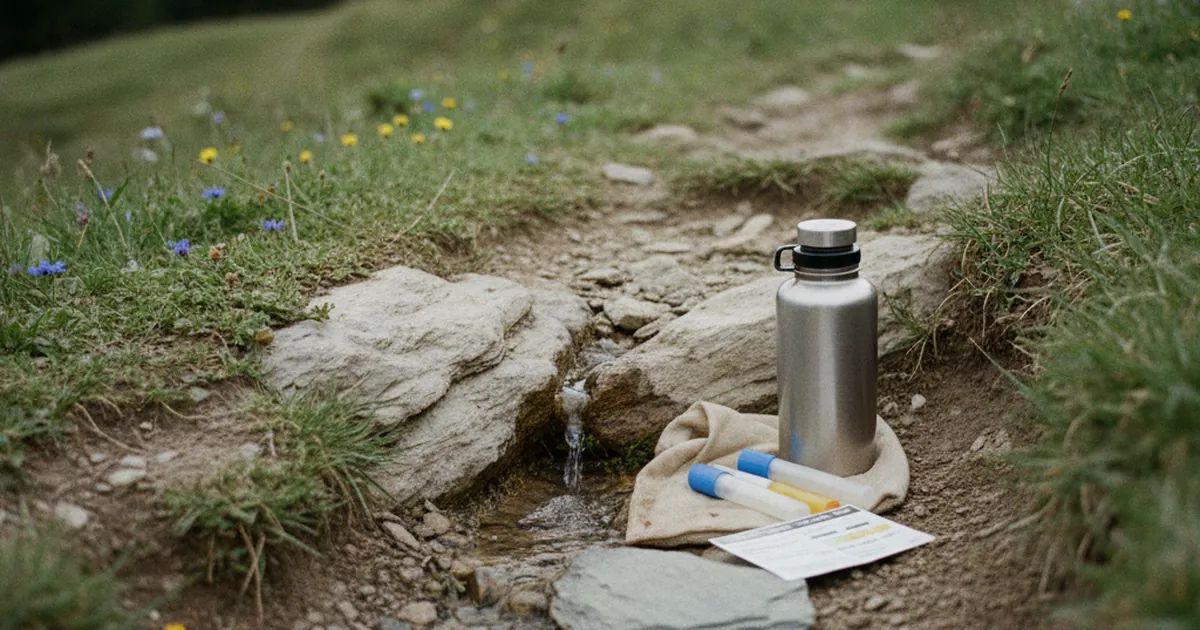
Before drinking, look around and think about what's happening upstream:
- Inhabited alpine pastures (alpages): if cattle or sheep are grazing nearby, contamination risk is high. Animal waste seeps into the soil and reaches underground water.
- Dense wildlife: marmots, chamois, and ibex all frequent water sources. Their droppings can also contaminate springs, even at high altitude.
- Stagnant or slow-moving water: the faster water flows from its rocky source, the less time it has had to pick up contaminants. Puddles and shallow snowmelt pools are riskier than a strong jet straight from a crack in the rock.
- Altitude below 2,000 meters: the lower you go, the denser the human and animal activity. Springs in lower mountain areas are generally less safe than those above all grazing zones.
Signs of a potentially reliable source
Some reassuring indicators:
- Water flows directly from bare rock or a stone fracture, with no visible contact with soil or dense vegetation.
- The spring is clearly at the head of the watershed, above any known grazing area.
- The water is very cold, a sign it comes deep from snowpack or an underground aquifer.
- No smell, no surface film, no discoloration.
A word of caution though: none of these criteria guarantee the absence of biological contamination. They lower the risk; they don't eliminate it.
Treating water on the trail: three methods
If you hike regularly, investing in a filtration system is well worth it. Three main options:
- Membrane filter (Sawyer, Katadyn, MSR): compact, light, effective against bacteria and protozoa including Giardia. Most attach directly to a bottle. Long lifespan, simple maintenance.
- Chemical tablets: sodium dichloroisocyanurate (NaDCC) or iodine. Effective against bacteria but less so against some resistant protozoan cysts. Wait at least thirty minutes. Practical as a backup or emergency supply.
- UV pen (SteriPen): destroys living organisms via ultraviolet radiation. Fast, no chemical aftertaste. Requires batteries and works best in clear water.
Whether you're heading out in the Aravis range or spending a long day in the Arve valley, a lightweight filter in your pack can be the difference between a smooth day and a rough week.
Practical notes for Haute-Savoie
This region has many high-altitude grazing areas. Around Thônes and throughout the Aravis massif, herds graze high and are present from June to September, exactly when hikers are out in force.
On demanding routes like the Pointe de Nantaux or the Tête de Bostan via the gold mines, you often cross alpine pastures before reaching the high ridges. Springs encountered early in the hike are more exposed than those up on the crests.
In Samoëns and the upper Giffre valley, staffed mountain huts provide treated water. Fill up your bottles there before heading back out.
The takeaway
Mountain water can be excellent, but it always deserves an assessment before you drink. Look upstream, evaluate the animal context, and if there's any doubt, filter or purify. A filter in your pack weighs less than a hundred grams and can save you days of unpleasant recovery. In the mountains, what you see is not always what you're drinking.